Forklift Annual Inspection Process and Requirements, Basic Forklift Knowledge
Many factory managers worry about failing official periodic inspection. You can check against standards in advance to raise the passing rate by learning forklift annual inspection process and requirements. Forklifts belong to special equipment used within sites, and regular inspection is mandatory. Late preparation often leads to non-compliance and production interruption.
First, prepare complete documents. Required materials include factory certificate, usage registration certificate, operator certificates, equipment ledger and daily maintenance records. Missing or incomplete records will result in rejected inspection application. Forklifts need annual inspection once every year. Book inspection before expiry to avoid risks from overdue operation.
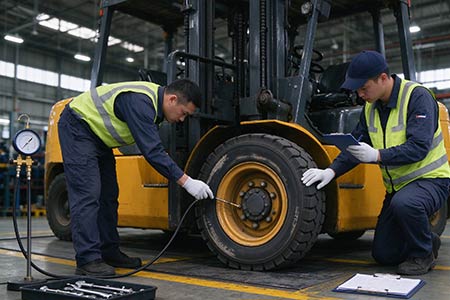
Second, inspect overall appearance and structure. Check the mast for deformation, cracks or broken welds. Forks should be free of cracks and excessive wear; replace forks when thickness wear exceeds the limit. Keep chains at proper tension without rust or jamming. Pins and fasteners should not be loose or missing. Guards, seats, handrails and mirrors must stay intact. Nameplates should be clear and unmodified.
Third, test all safety devices, which are key scoring items. Emergency stop, horn, lights and reverse warning alarms must work normally. Service brake and parking brake should be reliable without deviation or braking failure. Attachments and load labels need to be complete, and overload limiter should function well. Models with tilt cylinders should move steadily without spontaneous sliding.
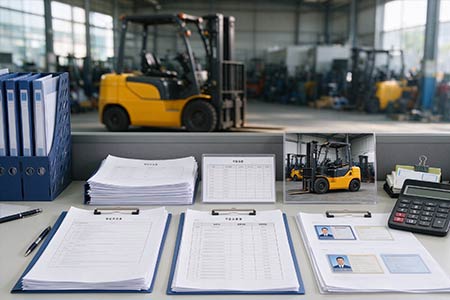
Fourth, check power and hydraulic systems. For fuel forklifts, confirm no oil or gas leakage and abnormal black smoke. For electric forklifts, inspect cables for damage and loose connectors. Hydraulic pipes, cylinders and joints should have no seepage. Lifting and tilting actions should run smoothly without stuck movement or abnormal noise. Forks must not drop rapidly after pressure release.
Fifth, eliminate on-site hazards. Tires should have acceptable wear and correct air pressure without large cracks. Maintenance records must be true, fake records are not allowed. Operators must hold valid certificates and receive regular safety training.
Repair defects found during self-inspection before formal inspection. Do not run faulty forklifts. Contact us for maintenance service or genuine spare parts if you want to learn more about basic forklift knowledge.
-
 Newnewton Forklift: Full Range Warehouse Handling Equipment with Spot SupplyNewnewton runs a 4000㎡ factory in Taizhou with full warehouse equipment range. Ready stock, OEM, CE certification and sufficient spare parts available.
Do you like ?0
Read more -
 Warehouse Stacker Source Factory, Electric Warehouse StackerElectric stackers vary widely in price. Verify factory capacity, specs and after-sales service, test machines and avoid under-configured middlemen.
Do you like ?0
Read more -
 Ride-on Reach Stacker Battery Maintenance, Ride-on Lithium Reach StackerReach rider lithium stackers face costly battery damage. Proper charging, wiring inspection and load control extend battery life and cut downtime.
Do you like ?0
Read more -
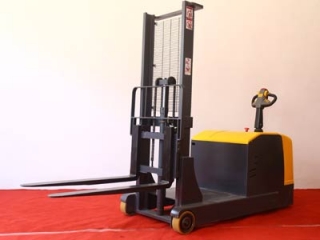 Custom Pallet Ride-on Counterbalance Stacker, Legless Ride-on StackerForklifts as on-site special equipment need annual inspection. Check documents, structure, safety devices and hydraulic systems in advance.
Do you like ?0
Read more -
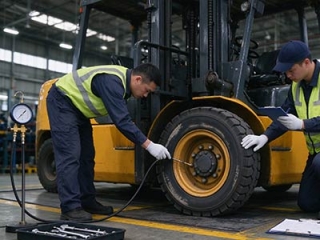 Forklift Annual Inspection Process and Requirements, Basic Forklift KnowledgeForklifts as on-site special equipment need annual inspection. Check documents, structure, safety devices and hydraulic systems in advance.
Do you like ?0
Read more -
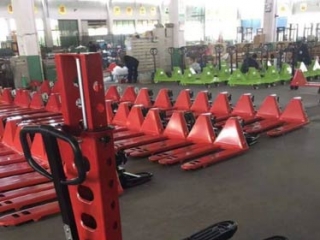 Difference Between Electric Self-loading Stacker and Truck Mounted ForkliftSelf-climbing trucks and truck-mounted forklifts handle cargo loading differently. Choose based on load, modification needs and actual working scenarios.
Do you like ?0
Read more