What are the common faults of the battery of electric stacker? How to repair?
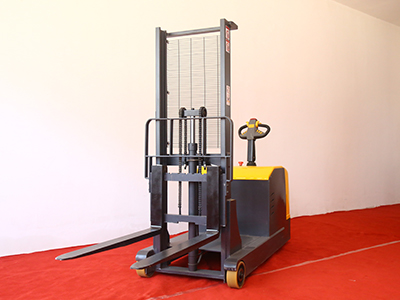
Electric stacker is a mechanical equipment with battery as power source. Therefore, the battery is an important part of the electric stacker. Once it fails, the whole electric stacker cannot work normally. The storage battery must work in an environment with a temperature of 5 ° C~40 ° C and a relative humidity of not more than 80% since the date of delivery. Even if it has been working in an environment that meets the requirements, its capacity will be reduced after more than two years of use, and its performance will become worse and more prone to failure. So, what are the common faults of the battery of electric stacker? The stacker manufacturer has something to say.
The first common problem of the battery of electric stacker is the capacity reduction. If the capacity of the battery fails to reach the rated capacity, or the capacity is insufficient, it may be caused by insufficient charging after use, low electrolyte density, and blocked external wiring. In the face of this problem, we can take the following measures: equalize charging and improve operation methods; Adjust the density of electrolyte; Straighten the external circuit and reduce the resistance. If the capacity of the battery is gradually reduced, it may be because the plate is seriously vulcanized and the electrolyte is mixed with impurities. The battery is partially open. At this time, we need to charge repeatedly to eliminate the sulfation of the electrode plate, check and replace the electrolyte, and replace the battery if necessary. If the capacity of the battery suddenly decreases, the stacker manufacturer told everyone that it may be due to a short circuit inside or outside the battery. We must check the cause and eliminate it in time.
The second common problem of the electric stacker is the abnormal density and color of the electrolyte. If the density of the electrolyte increases little or does not change during the charging process of the battery, it may be caused by the sulfation of the electrode plate. What we need to do is to eliminate the sulfation of the plates. If the density of the electrolyte drops sharply during the storage period after the battery is charged and discharged, it indicates that the self-discharge of the battery is very serious. At this time, we need to replace the electrolyte. If the color and smell of the electrolyte are abnormal, and there is turbid precipitation, it is proved that the electrolyte is not pure, and the active substances fall off. The stacker manufacturer told everyone that in the face of this problem, we need to replace the electrolyte and clean the inside of the battery.
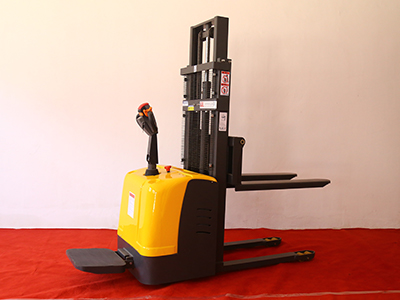
These are two common problems of the battery of electric stacker. You need to judge which problem is causing according to the specific phenomenon of your electric stacker, and then solve it accurately. If the problem of the electric stacker is serious and the battery or the whole electric stacker needs to be replaced, please contact the stacker manufacturer.
-
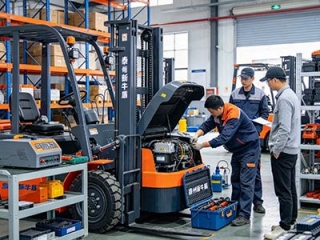 Taizhou newnewton Forklift Manufacturer IntroductionAvoid selecting warehouse forklifts only by unit price. Check site conditions, certificates and after-sales. Newnewton, Taizhou source factory, provides full product range, CE certification, customization and reliable spare parts supply.
Do you like ?0
Read more -
 Semi-electric Stacker vs Manual Stacker Cost ComparisonWhen buying stacking equipment for small warehouses, compare semi-electric stackers and manual stackers from cost, efficiency and maintenance to balance upfront expense and long-term investment.
Do you like ?0
Read more -
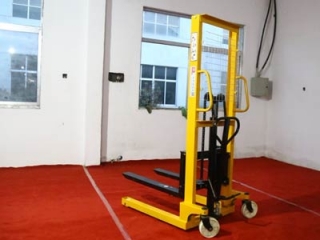 CE Certification for Manual Hydraulic StackerNewnewton manual hydraulic stackers exported to EU need CE certification complying with 2006/42/EC and EN1757-1, including safety assessment, technical documents and product compliance checks.
Do you like ?0
Read more -
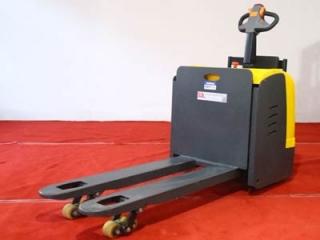 Stand-on vs Walk-behind Electric Pallet Truck ComparisonUnderstand the differences between stand-on and pedestrian electric pallet trucks in operation, efficiency, aisle requirements and costs. Choose the right model based on warehouse scale, transfer distance and order volume.
Do you like ?0
Read more -
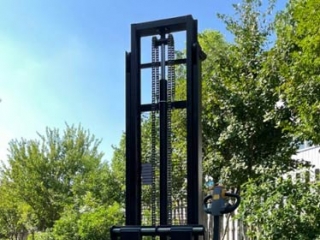 Operation Notes for Electric Self Elevating TruckPedestrian electric stackers cover tiered brand options with different features. International brands offer stable performance at high cost, while domestic brands and factory suppliers provide better cost performance and customization.
Do you like ?0
Read more -
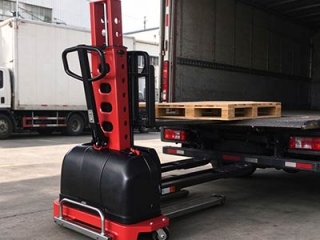 Operation Notes for Electric Self-elevating Truck | Truck Mounted Forklift SafetTruck-mounted self-loading forklifts fixed on truck tails handle cargo without loading docks. Control load and cargo gravity, inspect equipment and avoid soft slopes to prevent tipping and falling goods.
Do you like ?0
Read more