Low-Temperature Modification Requirements for Cold Storage Forklift
Many cold chain buyers simply modify standard forklifts for cold storage use. Once put into service, these machines often suffer from electric condensation, hydraulic oil leakage and rapid battery drain. OEM customization of cold storage forklifts is far more than just switching oil types. It delivers a complete low-temperature adaptation scheme according to constant warehouse temperature, temperature difference between inside and outside, and daily working hours.
A frozen food factory in Jiangsu keeps its warehouse at -22℃ all year round. Forklifts travel frequently between ambient loading docks and cold storage areas. The self-modified standard forklifts they bought at first suffered repeated controller short circuits within one month. After re-customization following OEM standards with four key modifications, the equipment has run stably ever since.
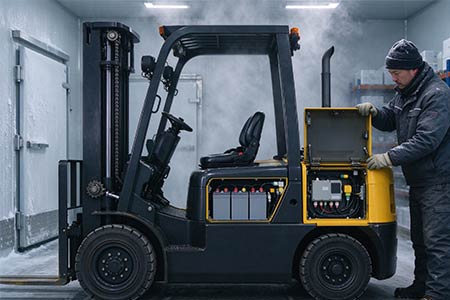
Battery system customization. For continuous operation below -18℃, lithium batteries with BMS automatic heating function are preferred. The battery compartment is sealed and dehumidified to avoid condensation caused by temperature changes. Lead-acid batteries need insulated heating compartments, and charging must be finished in ambient areas instead of inside cold storage. Manufacturers increase battery capacity based on working hours to offset capacity loss in low temperature.
Protection for electric parts and wiring harnesses. Controllers, meters and sensors are encapsulated. Waterproof insulating grease is applied to wire connectors to raise protection levels. Meters are equipped with heating modules to prevent black screens and display failure, solving condensation and short-circuit risks from temperature fluctuation, which is often overlooked in cold storage retrofitting.
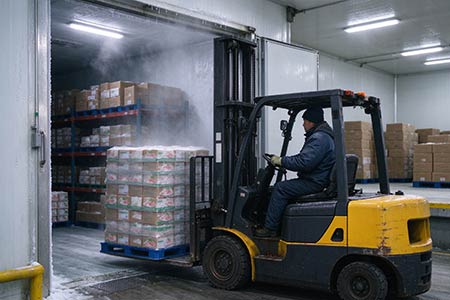
Modification for hydraulic and transmission components. Low-temperature hydraulic oil and grease are adopted. Cylinder piston rods get thick chromium plating with low-temperature resistant seals. Ordinary rubber seals harden and crack under cold conditions and lead to leakage. Low-temperature resistant materials are used for mast chains and bearings to avoid jamming and abnormal noise.
Anti-rust and anti-corrosion treatment for the whole truck. Exposed bolts are replaced with stainless steel or Dacromet coated parts. Sealant is applied on welding seams of frames and masts, and the whole machine gets upgraded anti-corrosion coating. Low-temperature polyurethane tires keep toughness in cold environments and prevent hardening and slipping.
Certifications and maintenance plans should be confirmed for OEM orders. Export orders can be equipped with special CE low-temperature test reports. Optional items such as cabin defrosters and heated seats are available. All modification items are recorded in supply contracts with clear warranty terms for low-temperature working conditions. Contact newnewton for cold storage forklift ordering and OEM customization.
-
 Low-Temperature Modification Requirements for Cold Storage ForkliftCold storage forklifts cannot be simple modified standard units. OEM low-temp upgrades cover battery, electrics and hydraulics against condensation, leakage and power loss.
Do you like ?0
Read more -
 Portable Electric Truck-Mounted Forklift for Mobile LoadingPortable truck-mounted electric forklifts enable self-loading without site forklifts. Suitable for multi-stop delivery, building materials, farm supplies and fresh retail.
Do you like ?0
Read more -
 Double Pallet Electric Pallet Jack | Sourcing Guide for Warehouse BuyersWide price gaps exist for double pallet electric forklifts. Low-cost versions often cut material quality. Compare batteries, load, drive types and options to avoid hidden fees.
Do you like ?0
Read more -
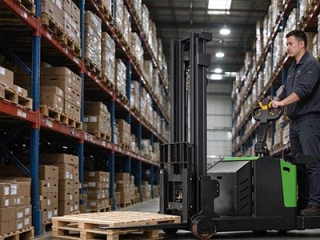 Slow Charging Troubles Solved by Lithium Counterbalance StackerLead-acid counterbalance stackers delay JIT supply for two-shift auto parts plants. Lithium versions support opportunity charging to match production rhythm.
Do you like ?0
Read more -
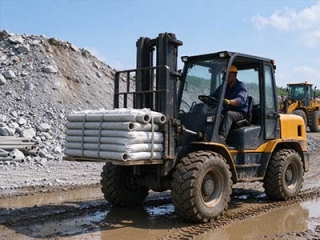 Anti-Slip 2WD Diesel Rough Terrain Forklift for Unpaved GroundRough sites need high-ground-clearance 2WD rough-terrain forklifts. Diesel power prevents slipping and bottoming for outdoor loose ground handling.
Do you like ?0
Read more -
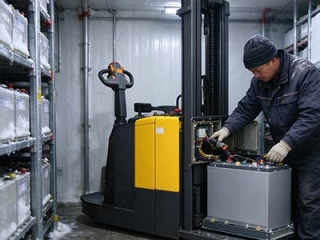 Cold Storage Narrow Aisle Stacker, Direct Supply for Cold Chain WarehousingCold storage narrow aisle stackers come with factory low-temp protection against condensation, better than simple retrofits for frozen food and pharmaceutical cold chains.
Do you like ?0
Read more