2026 Industry Guide: Application Scenarios of Walk-behind Counterbalance Stacker
Many friends new to warehouse handling often ask: How to choose the right stacker? In fact, understanding the application scenarios of the equipment is half the success. Today we focus on the application scenarios of walk-behind counterbalance stacker, to help you choose correctly without mistakes.
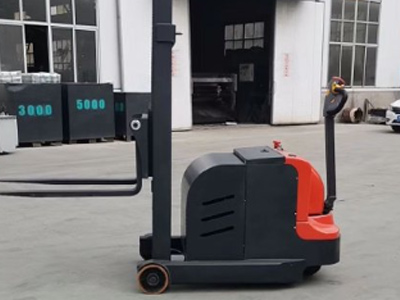
The biggest feature of the walk-behind counterbalance stacker is that it has no front outriggers. It lifts goods by rear counterweight without fork plate support, and has no special requirements for the ground or cargo location. This structure makes it especially suitable for truck unloading without a platform. No need for boarding plates or site renovation; it can load directly next to the vehicle, very flexibly.
It is also very practical in narrow spaces such as small warehouses, small workshops, basements, and store backrooms. The body is compact, lightweight to operate, with a small turning radius. One person can operate it easily without special driving space, making it ideal for narrow aisles and scattered cargo environments.
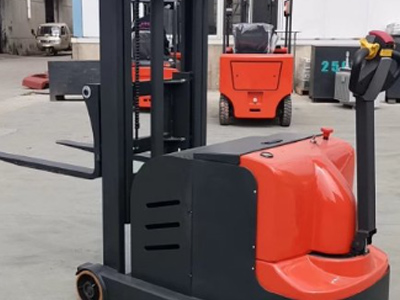
At the same time, it is suitable for uneven floors, non-drilling, non-rail installation sites. Unlike outrigger-type stackers that need support points, it can stop, fork and lift anywhere with strong site compatibility. It works well on cement, tile or epoxy floors.
For light to medium cargo lifting, loading, unloading and transfer – such as e-commerce sorting, hardware parts, food storage, workshop feeding – the walk-behind counterbalance stacker is a cost-effective choice. It is simple to operate, easy to learn and high in safety; even new operators can master it quickly.
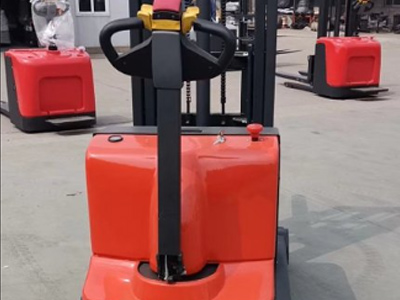
So how to choose the right stacker? If your scenario includes unloading without a platform, small-space operation, average ground conditions, or scattered cargo handling, choose the walk-behind counterbalance stacker first. It is practical, affordable, easy to maintain, and a very mainstream handling device for small and medium-sized warehouses and enterprises in 2026.
-
 Does 3‑Wheel Full‑Electric Forklift Tend To Tip OverThree‑wheel forklifts fit 2.8‑3.2m narrow aisles under TSG 81‑2022. Lower lateral stability raises rollover risks from offset load, fast turning and ramp operations.
Do you like ?0
Read more -
 4 Hidden Costs When Deploying Unmanned AGV ForkliftWarehouse AGV forklift projects involve hidden costs including floor renovation, system integration and commissioning. Evaluate full expenses in advance to avoid large‑scale budget deviations.
Do you like ?0
Read more -
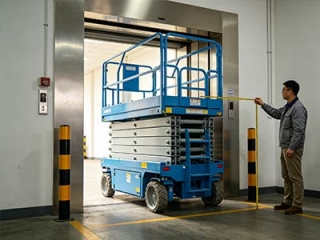 Key Parameters For Sourcing 8‑m Self‑Propelled Scissor Lift PlatformWhen selecting scissor lifts, distinguish working height from platform height per GB/T 25849. Check load capacity and access dimensions to prevent on‑site operation failures.
Do you like ?0
Read more -
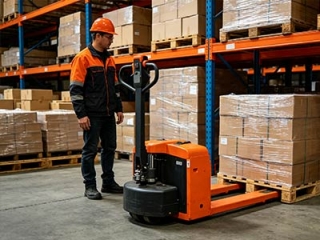 Features & Warehouse Application Of Electric Double Pallet JackElectric dual‑pallet trucks carry two pallets at once to ease aisle congestion and save costs. Designed for double‑sided pallets with specific aisle and floor requirements for high‑turnover warehouses.
Do you like ?0
Read more -
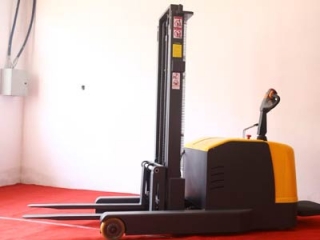 6 Practical Battery‑Maintenance Tips For Rider‑Operated Reach StackerReach‑truck range loss is not always battery failure. Charging, temperature and storage affect lifespan. Standardize lead‑acid & lithium‑ion maintenance to cut repair costs.
Do you like ?0
Read more -
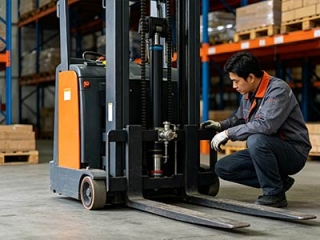 5 Common Malfunctions & Solutions For Semi‑Electric StackerOnline electric forklift rankings are merely reference. Three brand tiers are available; evaluate working conditions, budget and after‑sales for heavy‑duty work or custom demands.
Do you like ?0
Read more