
3‑point forklifts are widely adopted in narrow warehouses to save storage space. Compared with four‑wheel models, the three‑point structure looks less stable, and many operators worry about roll‑over risk. Whether does 3‑wheel forklift tip over easily and what are the key safety points? This article explains its stability feature and practical operation reminders.
Stability characteristics of 3‑point forklift. The full‑electric 3‑wheel forklift keeps balance via three‑point support. Featuring compact turning radius, it suits narrow‑aisle warehouses with aisle width of 2.8‑3.2 m. Qualified factory‑produced units have passed full‑machine stability test complying with TSG 81‑2022 industrial vehicle regulation.
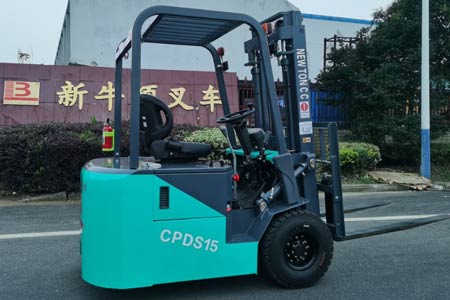
Nevertheless, it has lower lateral stability margin than four‑wheel forklifts and is more sensitive to lateral force. The tipping risk will rise obviously under certain working conditions, which is inherent structural feature instead of product quality defect.
Four main trigger factors for tip‑over accidents. Overload or offset cargo gravity. Eccentric load and single‑side heavy load on forks will destroy lateral stability, which is one of the most common causes of tipping.
Excessive turning speed. High‑speed turning with loaded goods generates centrifugal force and brings high side‑over risk. Sharp loaded turning is strictly forbidden for 3‑wheel forklifts.
Poor ground conditions. Turning or lifting on slopes, potholed floors will break three‑point supporting balance. Hazards may occur even under rated load capacity.
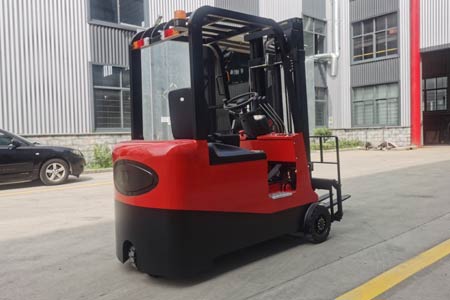
High‑speed travelling with raised mast. Higher lifting height raises overall center‑of‑gravity and reduces stability. Only low‑speed fine‑tuning is allowed under high lifting status; long‑distance high‑speed travel is prohibited.
Critical operation precautions. Reduce travelling speed under load and slow down in advance before turning. Avoid sharp steering. Place cargo in central position and reject eccentric loading.
Drive straight up and down slopes only. Never turn or travel crosswise on ramps. Repair pits and bulges on floor, do not operate on damaged ground.
Slow down when goods are lifted high, only short‑distance fine adjustment is permitted instead of high‑speed transfer. Operators shall hold valid industrial vehicle certificate and get familiar with unique handling features of 3‑wheel forklift.
Follow standardized operation and master above notes to improve operation safety of full‑electric 3‑wheel forklift.
-
 Newnewton Forklift Manufacturer, Forklift CE Certification for ExportNewnewton forklift factory offers full CE certification complying with EN ISO 3691, complete technical documents and OEM service to reduce customs detention risks.
Do you like ?0
Read more -
 Electric Forklift Vs Diesel Forklift, Warehouse Selection GuideElectric forklift is zero-emission and quiet for indoor clean warehouses. Diesel forklift offers strong power for outdoor heavy-duty tasks.
Do you like ?0
Read more -
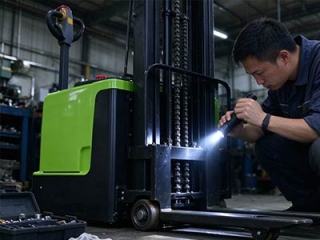 Narrow Aisle Stacker Forklift Custom Manufacturer for WarehouseCustom narrow aisle stacker for non-standard racking. Adjust body, mast and fork specs, upgrade power and protection, site survey available.
Do you like ?0
Read more -
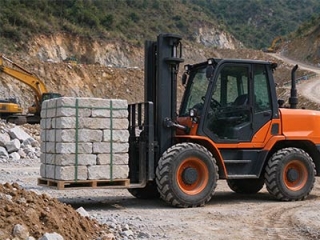 4WD All Terrain Rough Terrain Forklift Climbing for Mountain Sites4WD rough terrain forklift works on unpaved roads. Observe load climbing limit, attachments optional for forest and construction sites.
Do you like ?0
Read more -
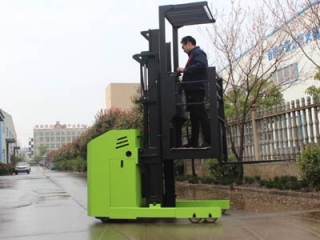 Man-Up Order Picker for High Level Picking, Suitable Warehouse ModesMan-up high level order picker for high-level split picking. Not for full pallet stacking, check rack, aisle and floor before selection.
Do you like ?0
Read more -
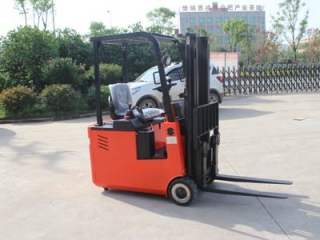 Narrow Aisle Operation Of Three-Wheel Forklift With Compact Turning RadiusThree-point electric forklift features small turning radius for narrow aisles. Reserve safety margin and check floor condition during selection.
Do you like ?0
Read more








