Working Principle of Manual Hydraulic Pallet Truck | Full Explanation
Many users are curious about the mechanism that makes manual hydraulic pallet trucks so light and labor-saving. Understanding the working principle of manual hydraulic pallet truck and its core hydraulic system will help you realize why it can easily lift hundreds of kilograms or even several tons of cargo, and also improve your daily operation and maintenance.
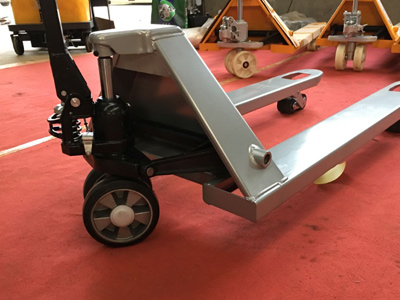
The core power of a manual hydraulic pallet truck comes from its hydraulic transmission system. Simply put, it uses the incompressible physical property of liquid to amplify small manual force into strong lifting power through hydraulic oil, similar to the lever principle.
The working principle of the hydraulic system can be divided into three steps:
First, when pumping the handle, the manual oil pump transfers force to the hydraulic oil. The small cylinder continuously pushes oil into the large cylinder, creating high pressure to push the piston upward.
Second, the high-pressure oil lifts the forks, raising the cargo smoothly. This is the key reason why operation feels effortless.
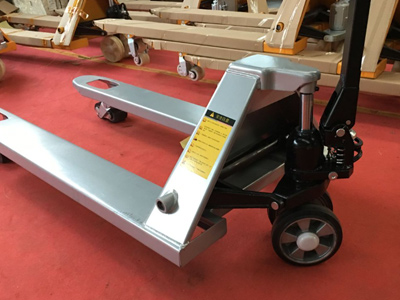
Third, when lowering is needed, gently open the pressure relief valve. The hydraulic oil flows back to the oil tank, pressure drops, and the forks slowly lower under gravity.
Besides the core hydraulic system, components such as cylinders, seals, oil pumps and relief valves work together for stable performance. This truck features simple structure, low failure rate, no electricity or fuel required. It only relies on human power and hydraulics to complete handling and lifting, which is why it is widely used in workshops, warehouses, supermarkets and logistics sites.
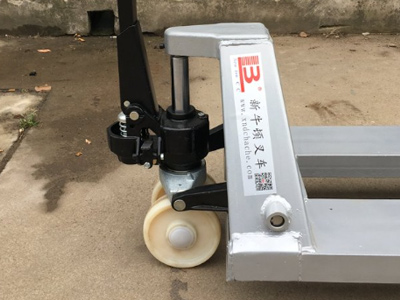
In short, the working principle of manual hydraulic pallet truck is not complicated. Its core is a stable and reliable small hydraulic system. Understanding the working principle of hydraulic system helps you operate better, quickly diagnose issues such as slow lifting, oil leakage or failure to lift, reduce maintenance costs and extend service life.
-
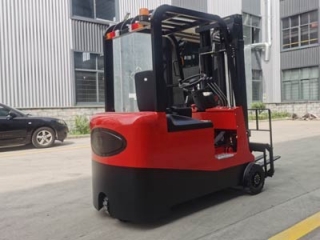 Does 3‑Wheel Full‑Electric Forklift Tend To Tip OverThree‑wheel forklifts fit 2.8‑3.2m narrow aisles under TSG 81‑2022. Lower lateral stability raises rollover risks from offset load, fast turning and ramp operations.
Do you like ?0
Read more -
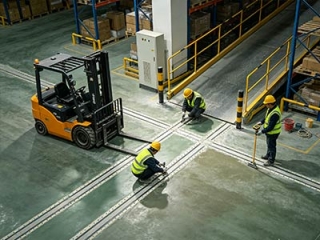 4 Hidden Costs When Deploying Unmanned AGV ForkliftWarehouse AGV forklift projects involve hidden costs including floor renovation, system integration and commissioning. Evaluate full expenses in advance to avoid large‑scale budget deviations.
Do you like ?0
Read more -
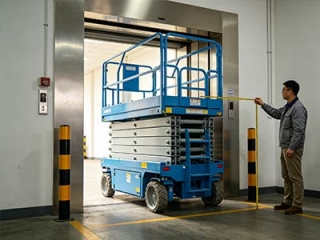 Key Parameters For Sourcing 8‑m Self‑Propelled Scissor Lift PlatformWhen selecting scissor lifts, distinguish working height from platform height per GB/T 25849. Check load capacity and access dimensions to prevent on‑site operation failures.
Do you like ?0
Read more -
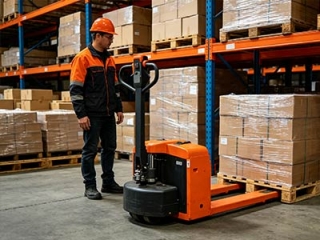 Features & Warehouse Application Of Electric Double Pallet JackElectric dual‑pallet trucks carry two pallets at once to ease aisle congestion and save costs. Designed for double‑sided pallets with specific aisle and floor requirements for high‑turnover warehouses.
Do you like ?0
Read more -
 6 Practical Battery‑Maintenance Tips For Rider‑Operated Reach StackerReach‑truck range loss is not always battery failure. Charging, temperature and storage affect lifespan. Standardize lead‑acid & lithium‑ion maintenance to cut repair costs.
Do you like ?0
Read more -
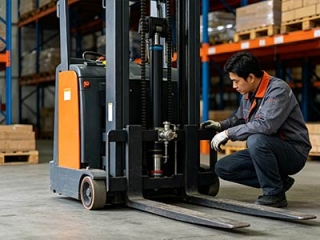 5 Common Malfunctions & Solutions For Semi‑Electric StackerOnline electric forklift rankings are merely reference. Three brand tiers are available; evaluate working conditions, budget and after‑sales for heavy‑duty work or custom demands.
Do you like ?0
Read more