
Stand‑On Electric Pallet Truck | Narrow Aisle Warehouse Buying Tips
Many older warehouses face narrow‑aisle constraints where standard handling equipment cannot move smoothly. A properly selected stand‑on electric pallet truck greatly improves throughput in compact storage zones, yet wrong specifications will render the machine impractical. Buyers should evaluate real‑site conditions before placing orders for a narrow aisle warehouse pallet truck.
First, check the actual aisle width. Do not rely merely on the theoretical minimum turning dimension of the truck. Besides vehicle body width, safe clearance for operators must be reserved. Oversized pallets may cause fork tips to strike rack posts even if the truck itself can pass. For most narrow‑aisle projects, the working aisle should exceed the vehicle’s minimum turning width to avoid frequent rack collision.
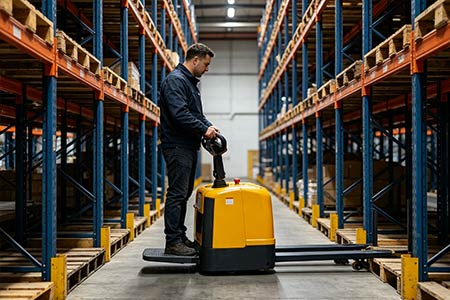
Second, confirm practical load capacity. Many purchasers only refer to nameplate rated load and ignore load attenuation caused by offset cargo placement. Eccentric, long or irregular pallets bring shaking driving status and higher tip‑over risks, even without exceeding nominal tonnage. Keep goods centered during operation, and reserve proper load margin according to actual cargo weight.
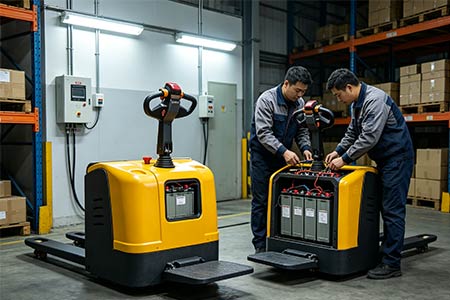
Third, choose suitable battery configuration. Narrow‑aisle warehouses usually run high‑frequency inbound‑outbound cycles. Insufficient battery capacity triggers unexpected downtime and breaks workflow. Lithium‑ion versions support opportunity charging for two‑shift heavy‑duty work. Lead‑acid options cost less but demand dedicated charging zones and longer charging hours. Match battery type with your working shifts.
In short, when sourcing a reliable stand‑on electric pallet truck for narrow‑aisle storage, assess aisle dimension, real load demand and power solution based on your warehouse status. Contact our team for free custom solutions if you have any confusion about equipment selection.
-
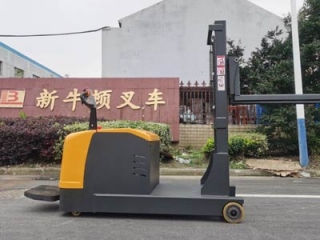 Stand‑On Counterbalance Stacker | OEM Custom ManufacturerStand‑on counterbalance stackers support OEM customization for special conditions. Differentiate simple branding from structural modification and confirm BOM list and delivery lead time.
Do you like ?0
Read more -
 Semi‑Electric Stacker | Buying Guide & Configuration ComparisonSemi‑electric stackers are cost‑effective for medium‑frequency stacking. Verify load margin, battery specs and mast workmanship to avoid false marking and insufficient battery runtime.
Do you like ?0
Read more -
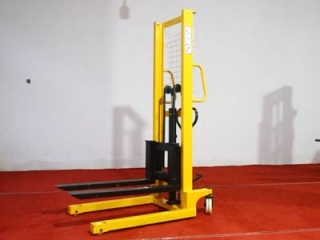 Hand‑Operated Forklift | Manual Hydraulic Stacker Warehouse Selection GuideManual hydraulic stackers feature low‑cost for light‑duty warehouses with low stacking frequency. Check load margin, lifting height and components to prevent potential faults and safety risks.
Do you like ?0
Read more -
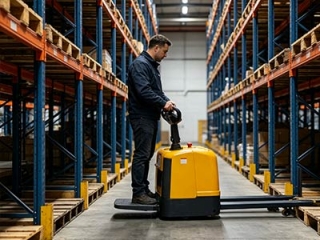 Stand‑On Electric Pallet Truck | Narrow Aisle Warehouse Buying TipsNarrow‑aisle pallet trucks suit old warehouses. Do not only refer to theoretical data; calculate actual aisle width, load margin and battery setup to avoid idle equipment waste.
Do you like ?0
Read more -
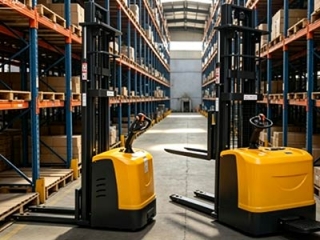 Walk‑Behind vs Stand‑On Electric Stacker | Core Differences & SelectionThere are obvious differences between pedestrian and stand‑on stackers. Choose according to warehouse aisle and daily workload for intermittent or high‑frequency operations.
Do you like ?0
Read more -
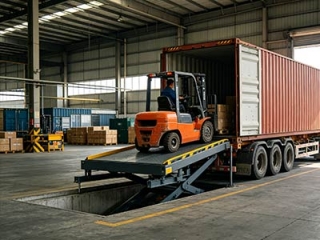 Hydraulic Dock Leveler | Four Types of Hydraulic Dock RampFour hydraulic dock ramp types for different scenarios. Wrong selection causes installation failure. Match civil‑work status and loading frequency to pick proper dock leveler.
Do you like ?0
Read more








