
What is the position of semi-electric stacker in electric forklift products?
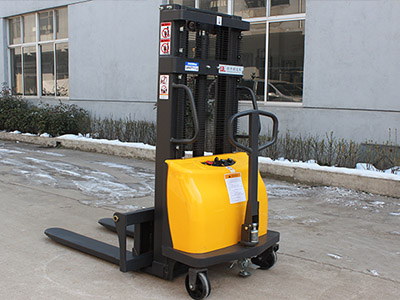
In the electric forklift industry, electric forklift manufacturers often classify electric forklift products according to market demand. The main purpose of the classification is to concentrate resources to create hot-selling products. So what is the position of semi electric stacker truck trucks among the many products of electric forklifts today?
The important basis for rating the status of semi electric stacker trucks must be market demand. However, the research on market demand is not determined solely by the sales of semi electric stacker trucks in a certain period of time. First of all, we must determine the customer groups and application industries for the semi electric stacker truck. Obtain more three-dimensional data from customer portraits and industry portraits. Of course, sometimes the downturn in related industries will also affect the sales of semi electric stacker trucks. Therefore, we must not only have a real-time tracking of sales data, but also combine horizontal historical data and vertical sales data of other categories of electric forklift products for comparison. In this way, historical data is formed, and the comparison of sales between different categories makes the data clearer and more reliable.
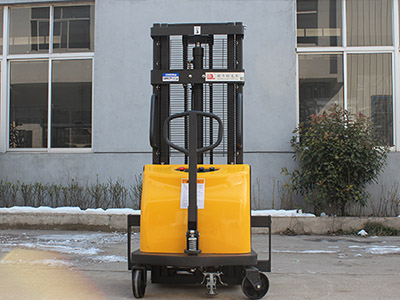
From historical data, the sales of semi electric stacker trucks were relatively stable in 2018 and 19, and sales have stagnated after 2020, and even have a downward trend.
From the perspective of the total sales of different categories of electric forklifts, the decline in sales of semi electric stacker trucks is not due to the downturn in the entire industry of electric forklifts, but that products with more complete functions and more convenient use have replaced them. Since 2020, the sales volume of walking all-electric stackers has gradually surpassed that of semi electric stacker trucks, and customers generally prefer walking stackers when evaluating semi electric stacker trucks and walking stackers. In terms of cost performance, the walking stacker is indeed better than the semi electric stacker truck.
-
 Stand-on Double Pallet Stacker Pros & Cons For High Throughput WarehouseIn high-turnover e-commerce warehouses, stand-on electric double pallet stackers carry two pallets at once to boost outbound efficiency. Check aisle space before purchase as the machine has a wider body.
Do you like ?0
Read more -
 Newniudun Forklift OEM Service, Taizhou Newniudun ForkliftBuilding your own forklift brand does not require self-built production lines. OEM manufacturing is ideal for traders. newnewton forklift provides equipment OEM, logo customization, export certification and stable supply.
Do you like ?0
Read more -
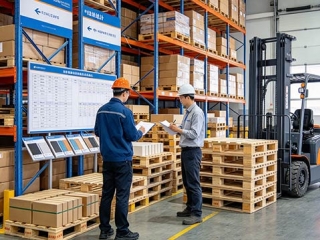 3 Core Rules for Small Warehouse Forklift SelectionMany buyers blindly pursue high load and lifting parameters for forklifts. Small warehouses need forklifts matched by aisle space, cargo demands and full-cycle costs for proper operation and budget control.
Do you like ?0
Read more -
5 Forklift Selection Tips for Small EnterprisesSmall enterprises often focus only on forklift unit prices and ignore actual warehouse conditions, leading to unusable equipment. Select suitable forklifts from five dimensions: aisle, cargo, environment, maintenance and certification.
Do you like ?0
Read more -
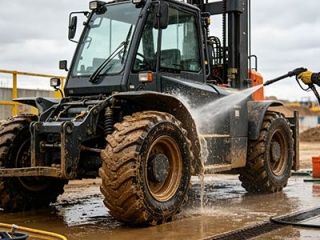 4WD Rough Terrain Forklift For Muddy Construction Site, Anti-stuck Off-road ForkOrdinary forklifts slip and get stuck on muddy post-construction sites. 4WD off-road forklifts with upgraded tires and high chassis adapt to unhardened ground for stable outdoor material handling.
Do you like ?0
Read more -
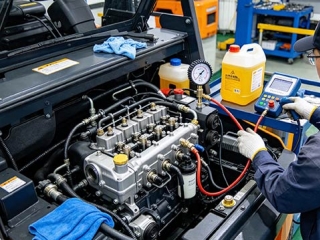 3 Steps To Troubleshoot Black Smoke Of Fuel Forklift, Reduce Equipment LossBlack smoke from fuel forklifts results from insufficient combustion and worsens engine wear and fuel consumption. Troubleshoot the air intake, fuel system and engine conditions to eliminate smoke faults efficiently.
Do you like ?0
Read more








