What are the quality requirements for the working device of the manual hydraulic
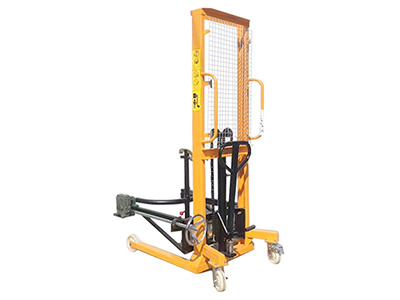
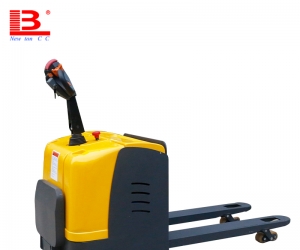
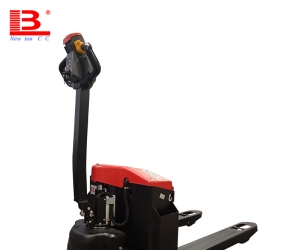
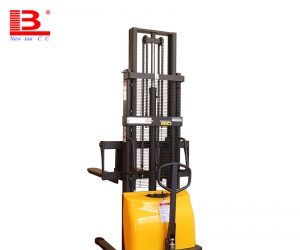
The manual hydraulic forklift has simple structure, flexible control, good micro-movement, and high explosion-proof safety performance. Suitable for narrow passages and limited space operations. It is an ideal equipment for loading and unloading pallets in high-bay warehouses and workshops. It can be widely used in petroleum, chemical, pharmaceutical, textile, military, paint, pigment, coal and other industries, as well as places containing explosive mixtures such as ports, railways, freight yards, warehouses, etc., and can enter the engine room, brackets and containers for palletized goods Loading, unloading, stacking and handling operations. It can greatly improve work efficiency, reduce labor intensity of workers, and win market competition opportunities for enterprises. So what are the requirements for the working device of the manual hydraulic forklift?
1. The mast of the manual hydraulic forklift shall not be deformed, and there shall be no welding seam de-welding phenomenon. The rolling gap between the inner and outer masts must not be less than 15mm; the rollers and axles must be free of cracks and defects, and the wear of the car groove must not be greater than 10% of the original size.
2. small hydraulic lift The tension of the two lifting chains should be even without deformation, and the ends should be firmly connected. The chain pitch must exceed 14% of the length, and the sprocket should rotate flexibly.

3. The small hydraulic lift fork frame must not be severely deformed, the fork surface must not have cracks, and each part of the welding must not be unsoldered, the fork rotation angle must not be greater than 90 degrees, and the thickness must not be less than 90% of the original size; left and right forks The difference in height of the tip should not exceed 93 degrees of the length of the horizontal section of the fork, the fork positioning pin is reliable, the support surface and positioning surface of the fork hook must not have obvious defects, and the clearance between the fork and the fork frame.
4. The connection between the lifting cylinder and the mast of the small hydraulic lift must be firm. When tilting the remaining mast of the cylinder, the hinge of the frame must be firm and flexible. The matching clearance should not be too large, the oil cylinder is well sealed, there is no crack, and the work is stable. Under the rated load, the inclination angle is not more than 0.5 degrees, and the full-load lifting speed is not lower than the standard value.
Stackers are widely used in various sectors of the national economy such as stations, ports, airports, factories, warehouses, etc., and are the main force of material handling equipment.
-
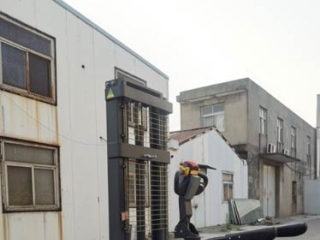 Stand-on Double Pallet Stacker Pros & Cons For High Throughput WarehouseIn high-turnover e-commerce warehouses, stand-on electric double pallet stackers carry two pallets at once to boost outbound efficiency. Check aisle space before purchase as the machine has a wider body.
Do you like ?0
Read more -
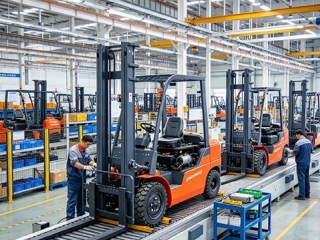 Newniudun Forklift OEM Service, Taizhou Newniudun ForkliftBuilding your own forklift brand does not require self-built production lines. OEM manufacturing is ideal for traders. newnewton forklift provides equipment OEM, logo customization, export certification and stable supply.
Do you like ?0
Read more -
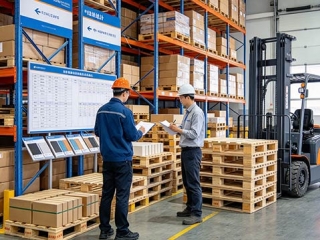 3 Core Rules for Small Warehouse Forklift SelectionMany buyers blindly pursue high load and lifting parameters for forklifts. Small warehouses need forklifts matched by aisle space, cargo demands and full-cycle costs for proper operation and budget control.
Do you like ?0
Read more -
5 Forklift Selection Tips for Small EnterprisesSmall enterprises often focus only on forklift unit prices and ignore actual warehouse conditions, leading to unusable equipment. Select suitable forklifts from five dimensions: aisle, cargo, environment, maintenance and certification.
Do you like ?0
Read more -
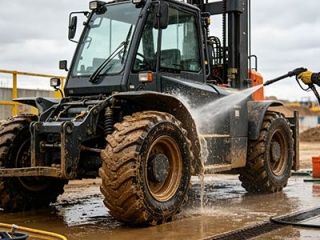 4WD Rough Terrain Forklift For Muddy Construction Site, Anti-stuck Off-road ForkOrdinary forklifts slip and get stuck on muddy post-construction sites. 4WD off-road forklifts with upgraded tires and high chassis adapt to unhardened ground for stable outdoor material handling.
Do you like ?0
Read more -
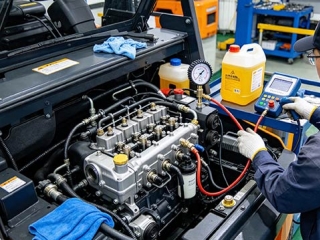 3 Steps To Troubleshoot Black Smoke Of Fuel Forklift, Reduce Equipment LossBlack smoke from fuel forklifts results from insufficient combustion and worsens engine wear and fuel consumption. Troubleshoot the air intake, fuel system and engine conditions to eliminate smoke faults efficiently.
Do you like ?0
Read more