
Walk-behind Counterbalance Stacker: Special Equipment Compliance Check
Many warehouse buyers worry about compliance when sourcing walk-behind stacking equipment. Is a walk-behind electric stacker a special equipment? The core reference standard is TSG 81—2022, Safety Technical Specification for Special Motor Vehicles Used in Factories and Yards. The machine will be included in special equipment supervision and require registration, annual inspection and N1 forklift operator certificate if four conditions are met. If any condition fails, it is not classified as special equipment, though internal safety training is still required.
The key factor is the driving mode. If it runs and lifts by its own electric power with an operator walking alongside to control it, it falls into the self-propelled forklift category defined in the specification. A unit with counterweight structure, lifting mast and forks for stacking, operating only inside factories or logistics parks without traveling on public roads, counts as a counterbalance forklift under special equipment.
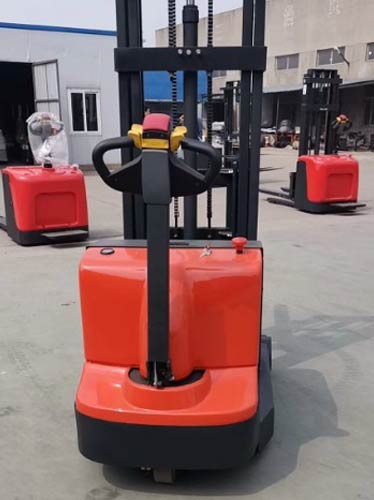
Some models on the market are easy to mix up. Manual push-pull walk-behind stackers without self-propelled power, even with electric lifting, are not special equipment. Some simple walk-behind stackers are straddle type instead of counterbalance type and are classified as pallet stackers. You still need to check the four conditions above instead of judging simply by its walk-behind operation.
Check the nameplate and type test document during procurement. If the nameplate marks it as a counterbalance forklift and it comes with a field vehicle type test report, it is within regulatory scope. Many buyers mistakenly believe walk-behind models do not need certificates. Regulation does not distinguish sit-down, stand-on or walk-behind operation. It judges by vehicle definition, power type and working area. Wrong judgment, unregistered equipment or unlicensed operators may lead to penalties from market supervision authorities.
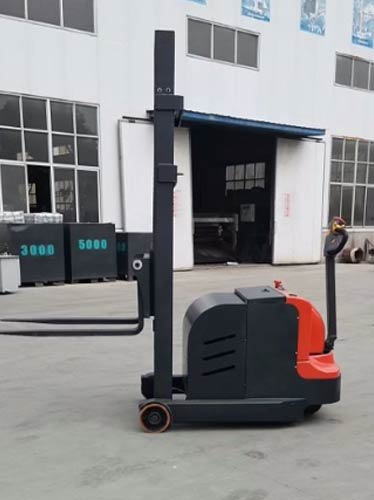
For walk-behind counterbalance stacker classified as special equipment, complete usage registration before commissioning and arrange periodic inspection every two years, and keep maintenance records. Simple stacking equipment outside special equipment rules does not require an N1 certificate, but speed limit, load control and regular inspection are still necessary to prevent tipping and crushing hazards.
Q&A
Q: Does walk-behind operation mean it is not special equipment?
A: No. The standard depends on whether it is self-propelled. Walk-behind is only an operation mode and will not change the equipment attribute.
Q: Do counterbalance and straddle stackers follow the same supervision rules?
A: Both belong to the forklift family with the same supervision standards, only differing in structure and stability.
Q: Is registration still required for outdoor use inside the factory yard?
A: Factory yards and logistics parks are within the scope of field vehicles, so special equipment management still applies.
-
 GB 19854 & GB 3836 Guide for Explosion-proof Electric Forklift SelectionWhen buying newnewton explosion-proof forklifts, follow GB 19854 & GB 3836, verify full certificates and distinguish original units from retrofitted ones.
Do you like ?0
Read more -
 Why Choose Three-way Order Picking Forklift for High-density High-bay WarehousesFor high-density storage, three-way stackers work without turning, fitting 1.6–1.8m aisles for stacking and picking to increase storage slots.
Do you like ?0
Read more -
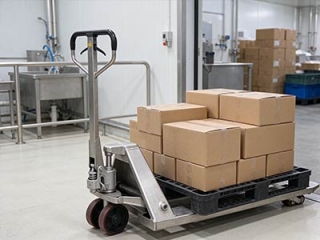 304 Stainless Steel Hand Hydraulic Pallet Truck | Stainless Pallet Jack304 stainless manual pallet trucks resist moisture for food, pharma and chemical warehouses, easy to clean, not for strong acid & alkali environments.
Do you like ?0
Read more -
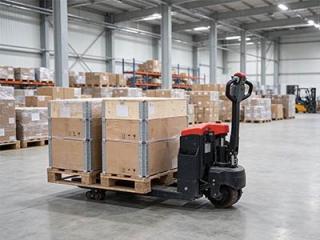 Where to Use Double Pallet Electric Pallet Jack for Warehouse HandlingLithium double pallet electric pallet trucks carry two pallets to cut trips, ideal for transit, e-commerce and factory warehouses, not for narrow aisles or uneven floors.
Do you like ?0
Read more -
 Walk-behind Counterbalance Stacker: Special Equipment Compliance CheckCompliance pitfalls exist in purchasing walkie stackers. Follow TSG 81—2022 to check power, structure, function and area to confirm registration, N1 license and inspection.
Do you like ?0
Read more -
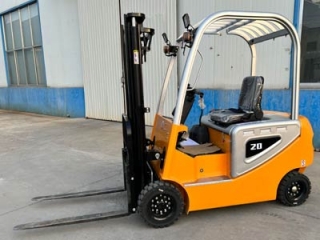 When to Replace Your 3.5 Ton Diesel Forklift? Service Life & Retirement RulesWarehouse managers care about service life of 3.5t diesel forklifts. GB/T44679-2024 sets 15-year statutory scrap limit for under-10t forklifts; judge replacement by working hours.
Do you like ?0
Read more








