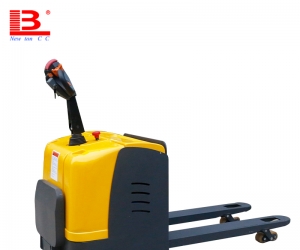
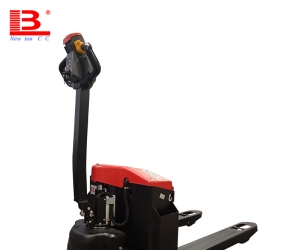
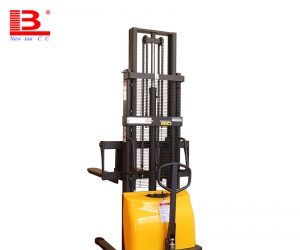
Do Counterbalance Stackers Need Loading Ramps? Legless Walk-behind Models
Many small factories and warehouses wonder: Conventional reach stackers rely on loading ramps, so Do Counterbalance Stackers Require Loading Ramps? The answer is no. This brings huge flexibility for cargo handling with zero terrain restrictions.
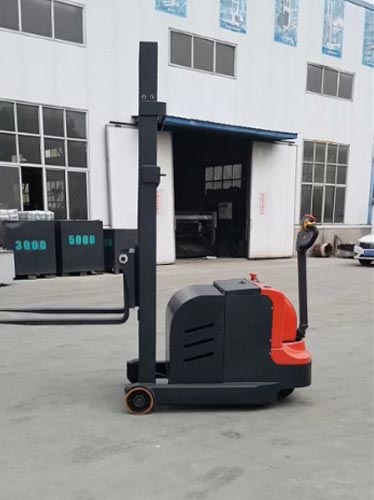
Standard leg-equipped stackers insert support legs under pallets. Height gaps between ground and truck beds easily jam the legs, making loading ramps essential for level operation. However, the Walk-behind Counterbalance Stacker features a fully legless design. A cast iron counterweight at the rear offsets front fork load. With no protruding legs underneath, it operates freely regardless of height differences.
It smoothly moves on flat ground, inside truck containers and over simple slopes. Warehouses without standard loading ramps can finish full truck loading/unloading independently. Two core ramp-free working scenarios:
Flat warehouse stacking: Compact walk-behind body passes through 1.8m narrow aisles for multi-level rack storage. Stable counterweight prevents rollover when lifting high loads.
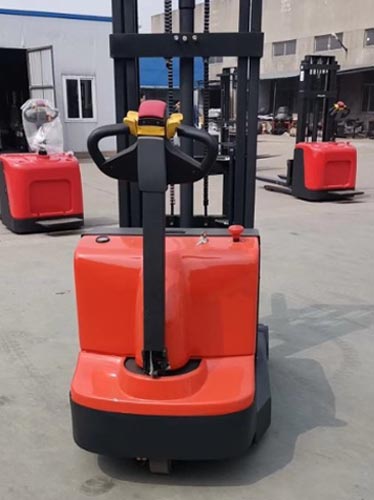
Ground-level truck unloading: Drive directly to truck tail and insert forks into pallets. One operator completes all unloading and warehousing steps without ramps. Factories skip costly civil engineering for ramp construction and cut site renovation investment drastically.
The Legless Electric Stacker also works perfectly on sites with existing loading ramps. Ramps only deliver smoother handling and higher efficiency for bulk long-distance cargo transfer as optional accessories, not mandatory equipment. Compared with reach and straddle stackers, it has minimal infrastructure requirements. It is the top stacking solution for old workshops, street retail stores and temporary storage areas where ramps cannot be built.
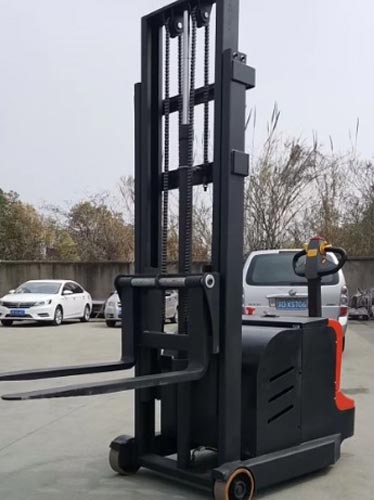
Standard load capacities: 1t & 1.5t, lifting height range: 1.6–3.5m. Full electric travel and lifting with an all-in-one control handle integrating emergency stop, speed adjustment and lifting buttons; new operators master operation quickly without training. Precision-calculated counterweight maintains vehicle balance even at maximum lifting height under full load. Built-in overload relief valve and anti-slip drive wheels avoid slipping and tipping on uneven floors.
Contact us anytime for specifications or further questions!
-
 Battery Capacity Of Electric Self-loading Lift Truck: Lithium Version GuideBattery capacity alone cannot decide the runtime of lithium electric self-loading trucks. Match battery specs with load, lifting times and working intensity.
Do you like ?0
Read more -
 4 Suitable Scenarios For Rider Electric Double Pallet StackerRider double-pallet stacker carries two pallets for high-turnover warehouses. Not fit for narrow aisles or rough ground, check site data before selection.
Do you like ?0
Read more -
 How Much Is A 1.5 Ton Walkie Electric Stacker?Avoid low-price traps for 1.5t walkie electric stackers. Verify load, battery, quotation and factory qualification, select based on warehouse conditions.
Do you like ?0
Read more -
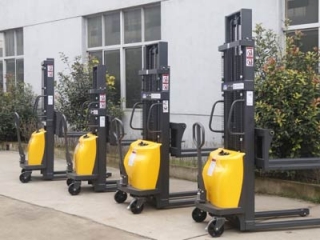 What To Do When Semi-Electric Stacker Runs Out Of PowerSemi-electric stacker power failure risks cargo drop. Set warning, release pressure manually to lower forks, troubleshoot and repair before reuse.
Do you like ?0
Read more -
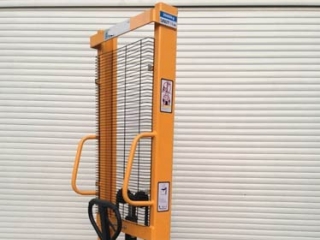 How To Select Narrow Aisle Manual Hydraulic Stacker: 4 Key PointsManual hydraulic stackers suit narrow aisles. Check aisle width, load, lifting height, forks and wheels, and maintain regularly for safe warehouse stacking.
Do you like ?0
Read more -
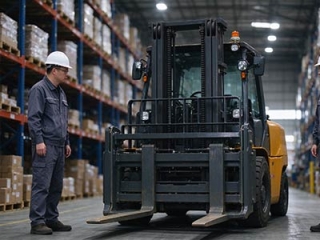 How to Select Attachment Specs for Heavy Duty Diesel ForkliftsAdding attachments to large-tonnage IC forklifts changes load center and reduces capacity. Check load center distance, oil interface, space and sight to confirm safe load.
Do you like ?0
Read more