
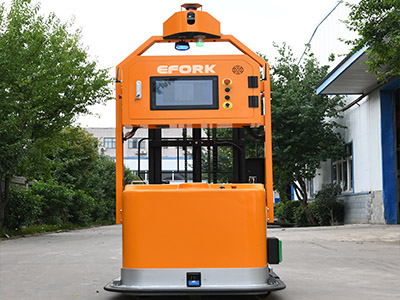
With the maturity of AGV technology, the structure of AGV forklift unmanned guided vehicle is becoming more and more standardized. There are many kinds of AGV, and different types of AGV unmanned guided vehicles will have certain differences in structure. AGV manufacturers will adjust the external structure and system according to the actual needs to help AGV operate. Here are three common questions for your reference.
1、 Is the standard of AGV fixed?
The standard requirements of agv forklift unmanned guided vehicle produced by small manufacturers are relatively fixed, and the national standards and quantity are relatively small. However, the AGV products produced by medium and large agv forklift unmanned guided vehicle manufacturers can meet the requirements of different customers. It needs analysis, research and customization, so the standard of AGV AGV is not a fixed type, and the appearance and internal modules can be modified and customized according to the needs of customers.
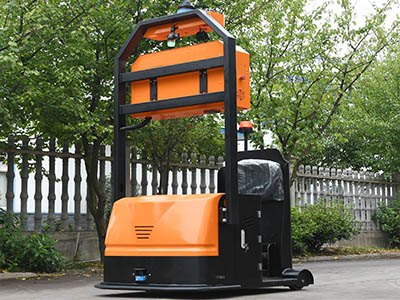
2、 Is the tonnage of agv forklift and unmanned vehicle the bigger the better?
This problem is somewhat one-sided, but it does not deny that it is reasonable, because the greater the weight of the AGV car, the less likely it is to overturn, but it does not mean that the greater the weight, the better the quality. If the weight is too large, the function of the power control system will be abnormal, which will not only increase the power consumption cost, but also affect the service life of the product. Therefore, when selecting the company, we should choose according to our own needs, rather than blindly selecting large tonnage.
3、 Can AGV climb mountains? Are there any restrictions?
No matter what kind of agv forklift or unmanned transport vehicle, there are certain restrictions when climbing the slope. AGV can not climb the steep slope, which can effectively avoid the occurrence of risk accidents. Because AGV has large volume and large parts, if the slope is large, the risk will increase. Therefore, if you need to climb, you must climb within the slope range specified by AGV.
-
 Stand-on Double Pallet Stacker Pros & Cons For High Throughput WarehouseIn high-turnover e-commerce warehouses, stand-on electric double pallet stackers carry two pallets at once to boost outbound efficiency. Check aisle space before purchase as the machine has a wider body.
Do you like ?0
Read more -
 Newniudun Forklift OEM Service, Taizhou Newniudun ForkliftBuilding your own forklift brand does not require self-built production lines. OEM manufacturing is ideal for traders. newnewton forklift provides equipment OEM, logo customization, export certification and stable supply.
Do you like ?0
Read more -
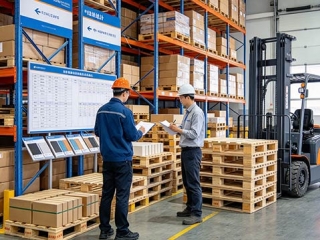 3 Core Rules for Small Warehouse Forklift SelectionMany buyers blindly pursue high load and lifting parameters for forklifts. Small warehouses need forklifts matched by aisle space, cargo demands and full-cycle costs for proper operation and budget control.
Do you like ?0
Read more -
5 Forklift Selection Tips for Small EnterprisesSmall enterprises often focus only on forklift unit prices and ignore actual warehouse conditions, leading to unusable equipment. Select suitable forklifts from five dimensions: aisle, cargo, environment, maintenance and certification.
Do you like ?0
Read more -
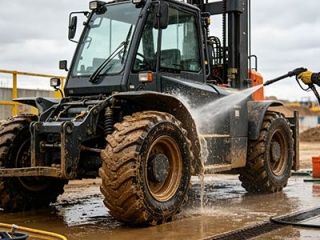 4WD Rough Terrain Forklift For Muddy Construction Site, Anti-stuck Off-road ForkOrdinary forklifts slip and get stuck on muddy post-construction sites. 4WD off-road forklifts with upgraded tires and high chassis adapt to unhardened ground for stable outdoor material handling.
Do you like ?0
Read more -
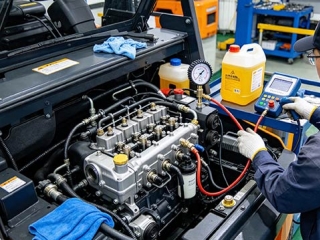 3 Steps To Troubleshoot Black Smoke Of Fuel Forklift, Reduce Equipment LossBlack smoke from fuel forklifts results from insufficient combustion and worsens engine wear and fuel consumption. Troubleshoot the air intake, fuel system and engine conditions to eliminate smoke faults efficiently.
Do you like ?0
Read more








