
Latest Price of Stand‑on Full‑Electric Stacker: 2026 Quotation Guide
2026 stand‑on full‑electric stacker quotation varies greatly. Even for models with identical specifications, notable price gaps exist among different brands, origins and configurations. This article details key configurations that exert major influence on the price of stand‑on full‑electric stacker latest price.
Load capacity: Every 0.5‑ton increase in rated capacity requires upgrades to frame steel plates, drive motors and hydraulic pump stations, pushing up overall machine cost by 10‑15 %. 1‑ton light‑duty units suit light‑goods and low‑rack applications; 1.5‑ton versions are market mainstream and preferred by most small‑and‑medium‑sized warehouses; 2‑ton heavy‑duty models adopt reinforced masts and oil cylinders for high‑frequency heavy‑load stacking.
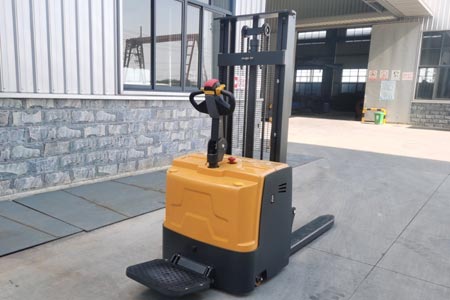
Please note load‑derating exists for stackers. Higher lifting height brings lower residual effective load. When comparing quotations, do not only focus on ground‑level rated capacity. Confirm the effective payload at your target lifting height.
Mast lifting height: Two‑stage mast with 2‑3 m lifting height offers optimal cost‑performance. For lifting height over 3.5 m, three‑stage full‑free mast is required, featuring thickened steel, enlarged chains and dual‑cylinder structure. Machine price rises by $148‑$444. Many buyers only compare tonnage yet ignore lifting height, leading to unfair parameter comparison and wrong judgment. For high‑rack warehouses, prioritize mast type and maximum lifting parameters.
Battery type creates the biggest quotation difference, accounting for 20‑30 % of total machine cost. Lead‑acid batteries feature low upfront cost, fit for 4‑6‑hour single‑shift daily work, with 800‑1000 charge‑discharge cycles and require regular water refilling. Lithium‑iron phosphate batteries are maintenance‑free and support fast charging with over 2000 cycles, ideal for two‑shift continuous‑operation scenarios.
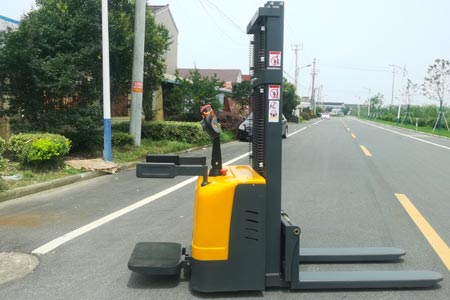
Compared with lead‑acid counterparts of same specs, lithium‑ion versions cost extra $296‑$593. Higher initial investment brings lower long‑term operation‑maintenance expenditure. Always confirm battery capacity during inquiry; different capacities of the same battery type create obvious gaps in endurance and price.
Electronic control, hydraulics and frame workmanship: Units with ordinary domestic controllers come at lower cost. Machines fitted with imported CURTIS controllers deliver smoother start‑stop speed regulation and lower failure rate, with price increase at hundreds‑dollar level. Low‑cost products often simplify pedal protection and shock‑absorbing structures and adopt thinner frame steel. They look attractive on quotation sheets yet wear rapidly under heavy‑duty frequent operation, resulting in frequent spare‑part replacement and raising overall warehouse O&M expenses.
If you want to get stand‑on full‑electric stacker latest price, send us your required technical parameters for targeted consultation.
-
 Newnewton Forklift Manufacturer, Forklift CE Certification for ExportNewnewton forklift factory offers full CE certification complying with EN ISO 3691, complete technical documents and OEM service to reduce customs detention risks.
Do you like ?0
Read more -
 Electric Forklift Vs Diesel Forklift, Warehouse Selection GuideElectric forklift is zero-emission and quiet for indoor clean warehouses. Diesel forklift offers strong power for outdoor heavy-duty tasks.
Do you like ?0
Read more -
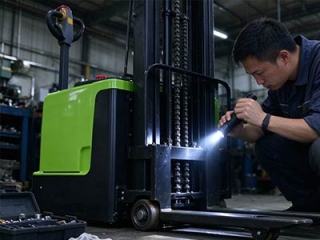 Narrow Aisle Stacker Forklift Custom Manufacturer for WarehouseCustom narrow aisle stacker for non-standard racking. Adjust body, mast and fork specs, upgrade power and protection, site survey available.
Do you like ?0
Read more -
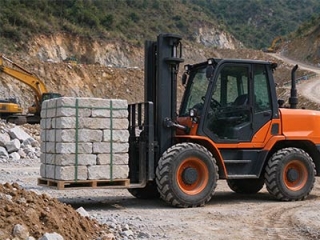 4WD All Terrain Rough Terrain Forklift Climbing for Mountain Sites4WD rough terrain forklift works on unpaved roads. Observe load climbing limit, attachments optional for forest and construction sites.
Do you like ?0
Read more -
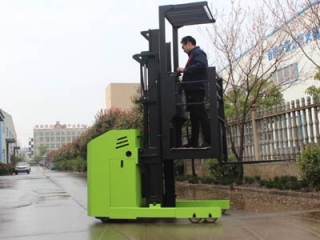 Man-Up Order Picker for High Level Picking, Suitable Warehouse ModesMan-up high level order picker for high-level split picking. Not for full pallet stacking, check rack, aisle and floor before selection.
Do you like ?0
Read more -
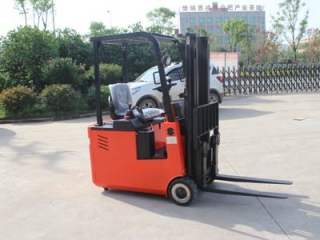 Narrow Aisle Operation Of Three-Wheel Forklift With Compact Turning RadiusThree-point electric forklift features small turning radius for narrow aisles. Reserve safety margin and check floor condition during selection.
Do you like ?0
Read more








