
Many warehouse owners misunderstand the Stainless Steel Manual Hydraulic Pallet Truck, believing rust-free frames equal zero oil leakage. In fact, stainless steel only prevents frame corrosion from moisture and disinfectants. The hydraulic sealing system is an independent structure; rust prevention and oil leakage prevention are two separate systems.
1. Anti-corrosion Frame System
Forks, chassis and wheel brackets are all stainless steel without carbon steel, resisting rust when exposed to salt water and cleaning agents. This part only solves body corrosion and has no connection with hydraulic tightness.
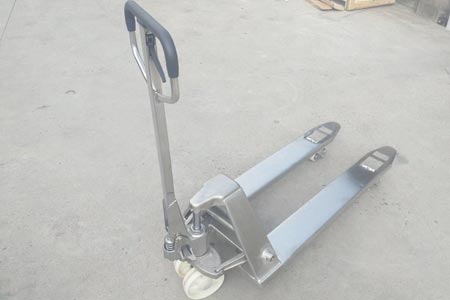
2. Hydraulic Sealing Assembly (Root Of Oil Leakage)
Key components: Chromed piston rod, piston oil seals, pump valve block and hydraulic oil. This set generates hydraulic pressure for lifting loads. Even if the frame stays intact, damaged seals will cause high-pressure oil seepage. Standard rubber seals equipped on original stainless trucks have weak resistance to water and acid-base liquids.
Hydraulic Lifting Working Principle
Pump the handle to compress hydraulic oil via the plunger; high-pressure oil flows into the cylinder bottom to lift forks. Outer piston seals lock pressure to avoid load sinking. Pull the release lever to drain oil back to the tank and lower forks smoothly. The whole lifting process relies entirely on seals. Any gap in sealing leads to oil seepage and automatic fork descent.
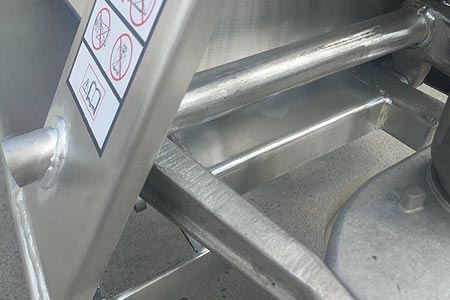
Why Oil Leaks In Humid Working Conditions
High-pressure washing water seeps into the cylinder along the piston rod, emulsifying hydraulic oil and losing lubricity.
Disinfectants corrode ordinary rubber seals, hardening and cracking them to create oil leakage gaps.
Tiny rust spots on the piston rod cut new seals repeatedly, forming a vicious cycle of continuous leakage.
Water inside the tank generates sludge that jams the one-way valve, losing pressure retention and causing pump seepage.
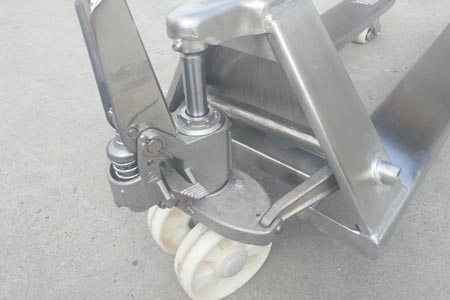
If you ask Will Stainless Steel Pallet Truck Have Hydraulic Oil Leakage, the answer is yes. Follow four methods to reduce leakage risks:
Upgrade standard seals to fluororubber acid-resistant oil seals against moisture and disinfectants.
Apply thick polished chrome plating on piston rods to avoid scratch damage to seals.
Install waterproof dust boots on pumps to block water from entering hydraulic chambers.
Replace hydraulic oil regularly to stop emulsification and internal component abrasion.
-
 Newnewton Forklift Export, Canton Fair Electric Warehouse Forklift ManufacturerAt the 140th Canton Fair, Newnewton displays full electric warehouse equipment, including cold storage and explosion-proof models with CE, OEM and export support.
Do you like ?0
Read more -
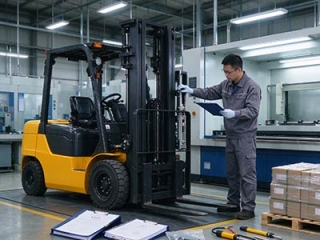 Electric Forklift Factory Direct Quotation, Warehouse Handling EquipmentSame model electric forklifts have varied quotes due to different configurations. Provide load, lift, working conditions and certifications for accurate direct factory pricing.
Do you like ?0
Read more -
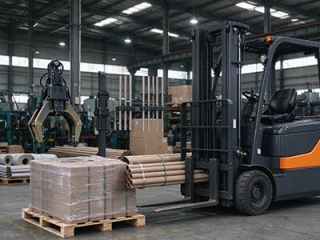 5 Common Working Scenarios for Customized Warehouse Forklift SolutionsStandard forklifts fail to fit special warehouse conditions. The factory offers customization for narrow aisles, cold rooms, explosion-proof and outdoor heavy-load scenarios.
Do you like ?0
Read more -
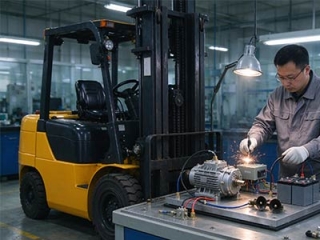 What Tests Are Conducted Before Explosion Proof Forklift DeliveryExplosion-proof forklifts are for flammable and dusty warehouses. They pass strict tests on structure, electrics, temperature and hydraulics before delivery.
Do you like ?0
Read more -
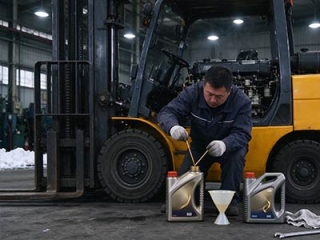 How to Maintain Internal Combustion Forklift in Cold WinterInternal combustion forklifts suffer hard starting and fuel icing in cold weather. Maintain fuel, oil, battery and cooling systems for winter use.
Do you like ?0
Read more -
 2 Ton Sit-down Reach Stacker, Sit-on Electric Reach Stacker2-ton seated reach stackers fit narrow aisle high rack warehouses. Its extending mast works for two-shift stacking; watch aisle size and high lift capacity deration.
Do you like ?0
Read more








