
Customers engaged in trunk distribution and full-truck delivery often face size limits when selecting truck mounted forklifts. Standard models may fail to fit due to varied tailgate height, inner truck width and reserved chassis space. Non-standard customization of self-elevating stackers is available, yet adjustments cannot be made arbitrarily and must comply with stability and safety standards.
Adjustable items are mainly outer dimensions for truck adaptation. The overall machine width, fork outer width and folded height can be revised according to truck inner width and tailgate opening size. Fork length can also be modified to match your regular pallet sizes.
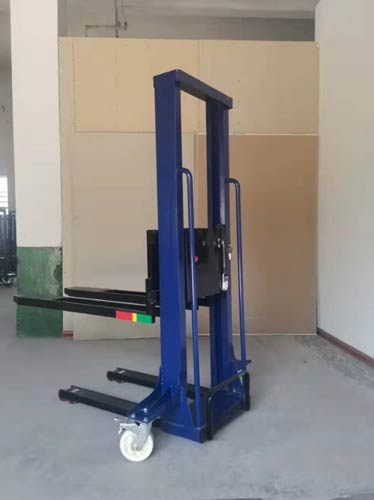
Battery capacity, control panel layout and joystick position can be adjusted to suit operators’ habits. Optional functions such as anti-slip design, low-speed lock and remote assistance can be added for different outdoor loading scenarios.
Some core parameters are restricted and strictly controlled during customization. Rated load capacity, load curve and counterweight configuration cannot be altered blindly. Unbalanced counterweight greatly raises the risk of tipping when loading at the truck edge. The hydraulic system, mast structure and stability calculation must meet relevant equipment standards. Stability tests are required after structural changes instead of simple dimension adjustment.
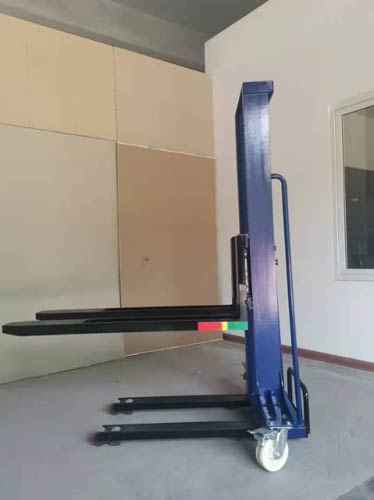
Here is a real case. A building material distributor had limited inner truck width which could not fit the standard self-elevating stacker. The customized narrower body with unchanged rated load and adjusted fork span fitted the truck successfully for on-site loading and unloading.
The client initially requested higher lifting height, but the assessment showed insufficient stability, so the original lifting height was retained for safety.
Full information should be collected during truck mounted forklift procurement: truck model, inner compartment dimensions, tailgate height, pallet specifications and single load weight for manufacturer evaluation. Custom orders take longer lead time. For export orders, certification documents must be confirmed. Structural changes require updated technical files for compliance.
-
 How to Locate and Fix Steering Noise on Electric Towing TractorsElectric tow tractors often have recurring steering noise. Different sounds indicate different damaged parts. Locate faults and maintain properly to avoid repeated issues.
Do you like ?0
Read more -
 Cut Warehouse Aisle Width With 3-Way Electric Stacker for Dense StorageThree-way forklifts rotate forks for side picking without turning. They cut aisle space to 1.6–1.8m and add storage slots for indoor warehouses.
Do you like ?0
Read more -
 Customized Truck Mounted Forklifts for Limited Truck SpaceElectric self-loading stackers for trunk delivery can be custom-sized to fit truck beds. Core safety parameters like load and counterweight cannot be changed freely.
Do you like ?0
Read more -
 How Does Dual Pallet Electric Stacker Realize Synchronized Fork LiftingElectric double pallet stackers use flow dividers and linkages for synchronized fork lift. Uneven side loads cause height gaps; standard forks move together without separate control.
Do you like ?0
Read more -
 4 Warehouse Scenarios Where Stand-on Reach Stackers ShineStand-on reach stackers reduce stacking aisles for warehouse expansion. Great for high-rack, renovated, transit and double-deep storage scenarios.
Do you like ?0
Read more -
 How to Replace Oil Filter for Fuel Diesel Forklift CorrectlyOil filters of diesel forklifts trap impurities. Clogged filters cause power loss and engine damage. Follow working conditions to set replacement cycles.
Do you like ?0
Read more








