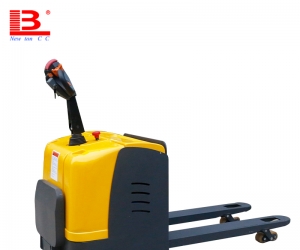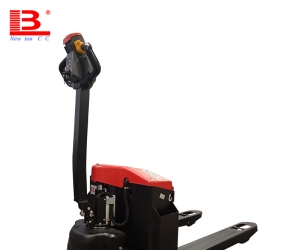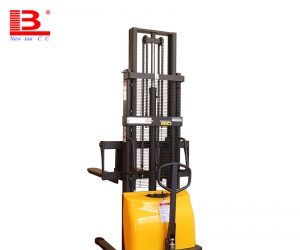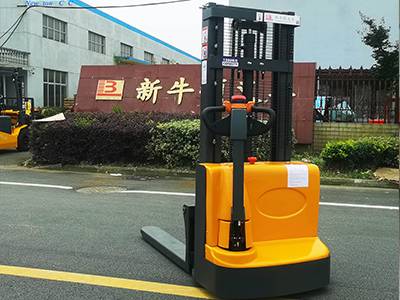
Small electric forklift is a fully electric energy storage environment-friendly storage forklift. Compared with internal combustion forklift, electric forklift has the advantages of no pollution, convenient operation, energy saving and high efficiency. With the development of economy and the improvement of environmental protection and energy saving requirements, small electric forklifts have developed rapidly. The market sales volume of forward stacker is increasing year by year. Especially in port, storage, tobacco, food, textile and other industries, small electric forklifts are gradually replacing internal combustion forklifts.
Before the operation of small electric forklift, check the appearance of small electric forklift and add lubricating oil and cooling water.
Check whether the indicator light and audio signal of the forward stacker are complete and effective.
When starting a small electric forklift, maintain an appropriate starting speed and don't be too violent.
Note the voltage of the positive stacker voltmeter. If the front vehicle voltage is lower than the limit voltage, the front vehicle shall stop running immediately.
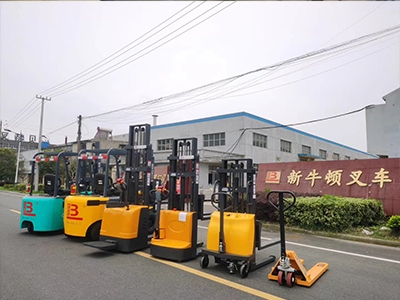
When moving the forklift forward, it is not allowed to change the direction of moving the stacker forward by turning the direction switch, so as to avoid burning electrical components and damaging gears.
It is not recommended to move and lift the forklift at the same time.
Pay attention to whether the drive system and steering system of front loading are normal. If abnormal sound is found, please eliminate the fault in time. It is forbidden to use the forward stacker for operation.
When moving forward, the stacker must slow down in advance.
Do not lift the fork too high when driving a small electric forklift. Pay attention to air obstacles when the forward stacker goes in and out of the construction site or drives. When moving the forklift forward, if the forklift is lifted too high, it will increase the height of the overall center of gravity of the forklift and affect the stability of the forklift.
After moving the stacker forward, lower the fork to the normal driving position before driving.
When a small electric forklift is loading goods, the distance between the two forks shall be adjusted as needed to balance the load of the two forks. One side of the goods shall be close to the shelf. The load weight of the fork of the forward stacker shall comply with the mark of the load center curve. regulations.
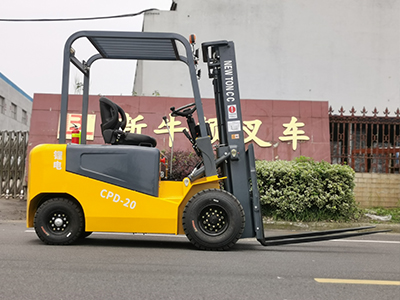
Precautions for small electric forklift
The weight of the goods must be known before lifting, and the weight of the goods shall not exceed the rated lifting capacity of the forward stacker.
When lifting and packing goods with small electric forklift, pay attention to whether the goods are tightly wrapped.
Adjust the fork spacing of the front forklift according to the size of the goods, so that the goods are evenly distributed between the two forks of the front forklift to avoid partial load.
When the fork is inserted into the stack, the gantry shall tilt forward. After the goods are loaded into the fork, tilt the gantry backward to make the goods close to the fork wall and lower the goods as much as possible. drive.
Small electric forklifts shall generally lift goods in a vertical position.
During manual loading and unloading, the fork must be stabilized with the hand brake.
The walking and lifting of small electric forklift are not allowed to operate at the same time.
When a small electric forklift carries goods on a steep slope, pay attention to the firmness of the goods on the fork.
-
 Stand-on Double Pallet Stacker Pros & Cons For High Throughput WarehouseIn high-turnover e-commerce warehouses, stand-on electric double pallet stackers carry two pallets at once to boost outbound efficiency. Check aisle space before purchase as the machine has a wider body.
Do you like ?0
Read more -
 Newniudun Forklift OEM Service, Taizhou Newniudun ForkliftBuilding your own forklift brand does not require self-built production lines. OEM manufacturing is ideal for traders. newnewton forklift provides equipment OEM, logo customization, export certification and stable supply.
Do you like ?0
Read more -
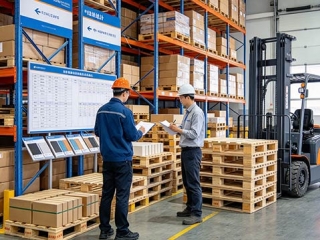 3 Core Rules for Small Warehouse Forklift SelectionMany buyers blindly pursue high load and lifting parameters for forklifts. Small warehouses need forklifts matched by aisle space, cargo demands and full-cycle costs for proper operation and budget control.
Do you like ?0
Read more -
5 Forklift Selection Tips for Small EnterprisesSmall enterprises often focus only on forklift unit prices and ignore actual warehouse conditions, leading to unusable equipment. Select suitable forklifts from five dimensions: aisle, cargo, environment, maintenance and certification.
Do you like ?0
Read more -
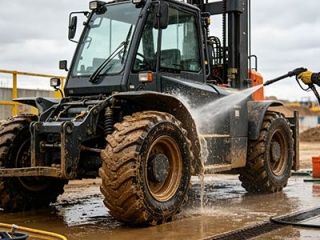 4WD Rough Terrain Forklift For Muddy Construction Site, Anti-stuck Off-road ForkOrdinary forklifts slip and get stuck on muddy post-construction sites. 4WD off-road forklifts with upgraded tires and high chassis adapt to unhardened ground for stable outdoor material handling.
Do you like ?0
Read more -
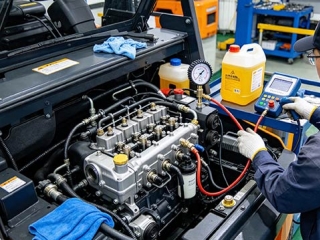 3 Steps To Troubleshoot Black Smoke Of Fuel Forklift, Reduce Equipment LossBlack smoke from fuel forklifts results from insufficient combustion and worsens engine wear and fuel consumption. Troubleshoot the air intake, fuel system and engine conditions to eliminate smoke faults efficiently.
Do you like ?0
Read more