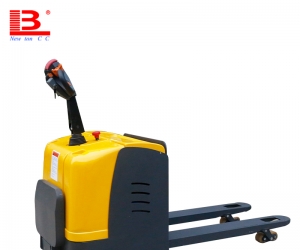
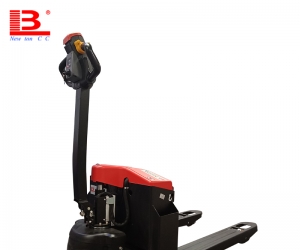
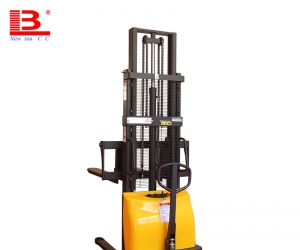
Stand-on Double Pallet Lithium Stacker Daily & Periodic Maintenance Tips
Double pallet lithium stackers carry two pallets at one time with heavier load and more frequent trips. Running continuously in distribution warehouses and stocking areas, they wear faster than standard single pallet stackers. Maintenance plans cannot copy ordinary models. Focus on lithium battery systems and load-bearing structures. How to maintain stand-on double pallet lithium stacker properly?
Finish basic pre-shift checks every day. Inspect forks and chains for cracks or deformation, check wheel wear and loose or overheated wiring plugs. Test forward, reverse, lifting and emergency stop functions. Ensure brakes are responsive and the truck runs straight under heavy load. Check the lithium battery shell for dents or bulges, keep charging ports dry and clean dirt timely.
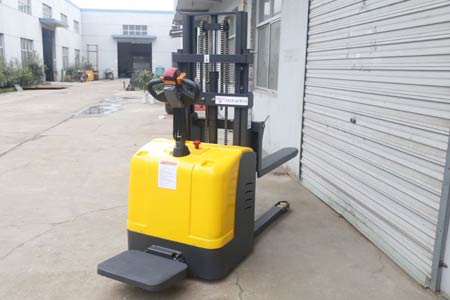
Carry out detailed weekly inspection. Remove strapping and debris wrapped around drive and load wheels. Apply grease to pins and mast chains. Check hydraulic fittings, which are prone to oil seepage under heavy loads. For lithium batteries, check cell voltage difference via BMS. Stop heavy-duty operation and balance the battery if the gap is too large.
Do special maintenance every month. Tighten bolts on frames and forks. Double pallet models have more stress points, so bolts are easier to loosen. Check welds on guardrails and standing platforms to avoid cracks caused by continuous vibration. Adopt shallow charge and discharge habits. Recharge when power reaches about 20%. Use breaks for charging in two-shift workshops and avoid draining the battery fully. For long-term storage, keep charge level between 40% and 60% in dry and ventilated space.
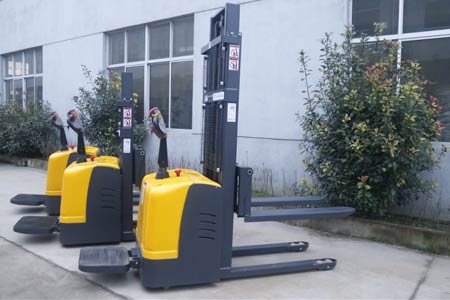
Avoid improper operations. Do not overload for a long time. Distribute cargo weight evenly on both pallets. Unbalanced load accelerates damage to frames and hydraulic parts. Stick to regular maintenance of electric double pallet stacker to cut repair cost and extend service life.
FAQ
Q: Can I use fast charging all the time?
A: Fast charging works for emergency use, but frequent long-term fast charging speeds up cell degradation. Normal slow charging is preferred for daily use.
Q: Do I need to replace both forks when one wears badly?
A: Replace them as a pair if one fork is severely worn, to balance load and prevent offset risks.
Q: Should I shorten the lubrication cycle for frequent heavy-duty work?
A: Yes. For two-shift high-frequency operation, lubricate chains every three days instead of weekly.
-
 What Is the Difference Between Double Pallet Truck and Standard Pallet JackDouble and single pallet trucks are for horizontal transport. Single suits narrow aisles, double carries two pallets for high efficiency yet needs wider space.
Do you like ?0
Read more -
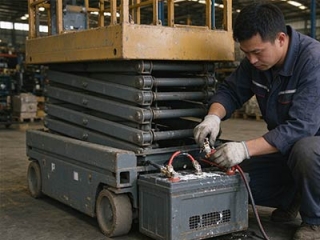 3 Key Points for Battery Maintenance of Battery Operated Scissor LiftAerial scissor lift batteries differ from forklift ones. Control charging, avoid long high-altitude standby and top up idle power to protect batteries.
Do you like ?0
Read more -
 Stand-on Double Pallet Lithium Stacker Daily & Periodic Maintenance TipsDual-pallet lithium stackers wear faster with heavier loads. Follow daily, weekly and monthly maintenance for load-bearing parts and lithium battery systems.
Do you like ?0
Read more -
 Why Working Conditions Matter When Buying Stand-on Electric StackerDo not only compare prices for stand-on stackers. E-commerce, cold and ramp workshops vary greatly. Customize specs on-site to avoid downtime.
Do you like ?0
Read more -
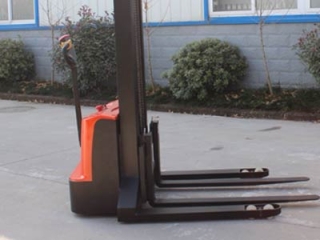 How to Operate Walk-Behind Straddle Full Electric Stacker, 6 Step GuideFollow standard steps for walkie straddle electric stackers to avoid pallet jamming and rack collision. Pre-check, fork alignment and safe stacking ensure operation safety.
Do you like ?0
Read more -
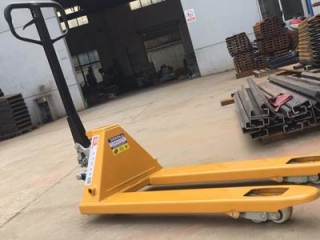 Manual Hydraulic Pallet Truck Won’t Lift: 4 Key Inspection PointsFailed lifting of manual pallet trucks is common. Check release lever, oil, valve seal and jamming first instead of replacing cylinders for low-cost repair.
Do you like ?0
Read more