
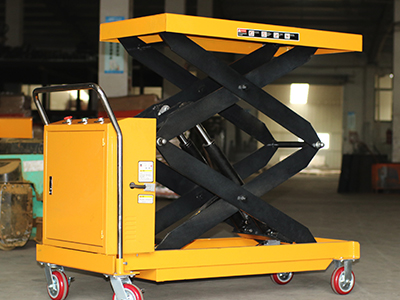
In our lives or in some industries, we often see scissor lift mechanisms.
In fact, there are many types of lift platform vehicles, such as scissor hydraulic platform vehicles, mobile customized lifting platforms, etc., which are mainstream products on the market. But how to choose is also a problem. Don't buy by price. Many manufacturers who do not understand think that high prices are helpful to their work. This idea is wrong, so we must change this concept and choose the right one. Products of our industry. Therefore, with the increase in market demand for hydraulic platform vehicles, some lifting platform elevator manufacturers have also emerged.
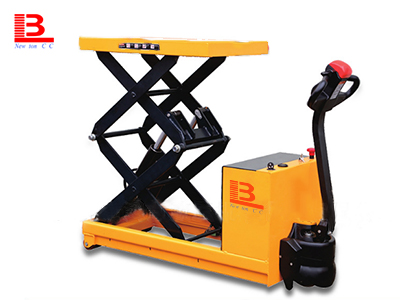
Secondly, the scope of use of scissor lift mechanisms has become wider. It is commonly used in industrial enterprises such as factories, construction sites, automobiles, containers, mold manufacturing, wood processing, and chemical tank making to meet the lifting needs of different working heights. At the same time, the lift platform car can be equipped with a variety of table tops and a variety of control methods, and the lifting is stable. What configuration is needed can be negotiated and customized with the lifting platform lift manufacturer. The feature of large carrying capacity effectively solves the difficulties of various lifting operations in industrial enterprises, making production operations easier.
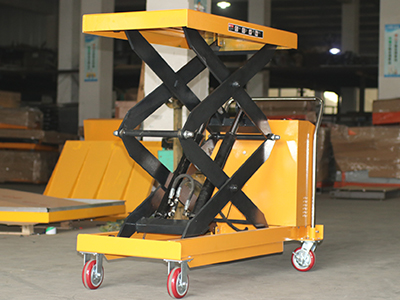
However, each scissor lift mechanism has its own limit load. If the limit load is exceeded, it will not only damage the elevator platform car, but sometimes also endanger personal safety. Therefore, all hydraulic platform vehicles must undergo weight testing before use to ensure that the hydraulic platform vehicles operate normally within the rated load range. Therefore, when the average user is overweight, they are often not noticed by employees. If the scissor lift mechanism is not operated and supervised by a dedicated person, it is best to install a load alarm device. This can also remind the operator not to work overload, which not only ensures the safety of the elevator platform truck, but also serves as a warning.
-
 Stand-on Double Pallet Stacker Pros & Cons For High Throughput WarehouseIn high-turnover e-commerce warehouses, stand-on electric double pallet stackers carry two pallets at once to boost outbound efficiency. Check aisle space before purchase as the machine has a wider body.
Do you like ?0
Read more -
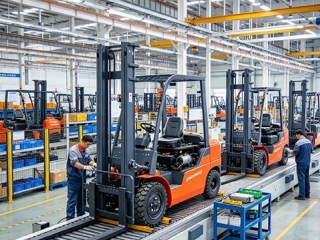 Newniudun Forklift OEM Service, Taizhou Newniudun ForkliftBuilding your own forklift brand does not require self-built production lines. OEM manufacturing is ideal for traders. newnewton forklift provides equipment OEM, logo customization, export certification and stable supply.
Do you like ?0
Read more -
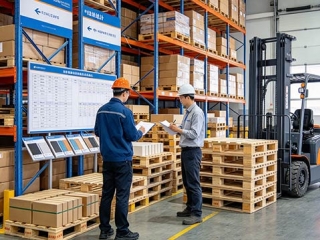 3 Core Rules for Small Warehouse Forklift SelectionMany buyers blindly pursue high load and lifting parameters for forklifts. Small warehouses need forklifts matched by aisle space, cargo demands and full-cycle costs for proper operation and budget control.
Do you like ?0
Read more -
5 Forklift Selection Tips for Small EnterprisesSmall enterprises often focus only on forklift unit prices and ignore actual warehouse conditions, leading to unusable equipment. Select suitable forklifts from five dimensions: aisle, cargo, environment, maintenance and certification.
Do you like ?0
Read more -
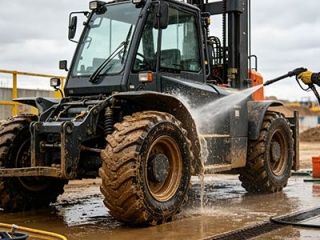 4WD Rough Terrain Forklift For Muddy Construction Site, Anti-stuck Off-road ForkOrdinary forklifts slip and get stuck on muddy post-construction sites. 4WD off-road forklifts with upgraded tires and high chassis adapt to unhardened ground for stable outdoor material handling.
Do you like ?0
Read more -
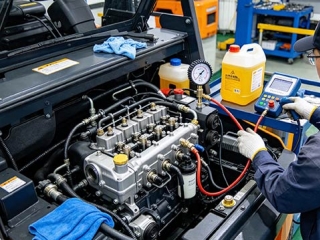 3 Steps To Troubleshoot Black Smoke Of Fuel Forklift, Reduce Equipment LossBlack smoke from fuel forklifts results from insufficient combustion and worsens engine wear and fuel consumption. Troubleshoot the air intake, fuel system and engine conditions to eliminate smoke faults efficiently.
Do you like ?0
Read more








