
Stand-On Reach Stacker | Reach Truck vs Stacker Comparison Guide
Many buyers confuse standard stackers and reach models when purchasing equipment for narrow-aisle automated warehouses. Improper selection leads to mismatched aisle width and high-lift load capacity, reducing warehouse turnover efficiency. Standard stackers can be used in narrow aisles, yet stand-on reach stacker delivers better performance. This article compares the two types to support your narrow-aisle equipment selection.
Body Structure
Standard electric stacker: Equipped with load support legs that must go underneath pallets during operation. Restricted by legs, it cannot work with bottomless pallets or closed-bottom racking. Load capacity attenuation is obvious at high lifting heights, suitable for medium and low-level stacking.
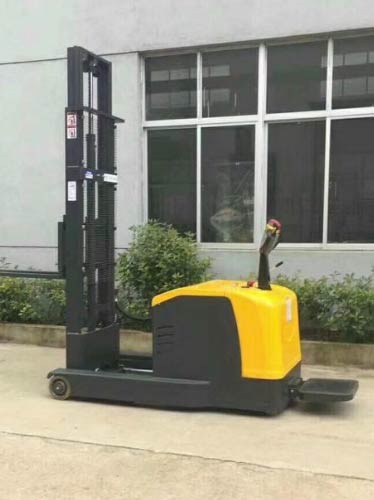
Stand-on reach stacker: Fitted with extendable reach mast without outward load-bearing legs. The independent moving mast picks up goods without pallet structure limitations. Compact chassis and smaller turning radius make it ideal for high-level racking in narrow aisles.
Load Capacity & Lifting Height
Standard electric stacker: Common maximum lifting height ≤3.5m. Effective load drops sharply as height increases, suited for light loads and low-level rack access.
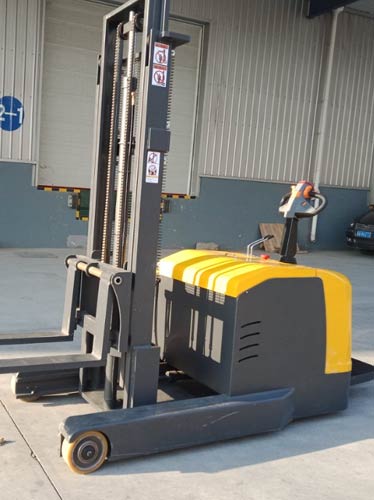
Stand-on reach stacker: More rigid mast structure. Lifting height ranges from 6m to 10m with better load retention at elevated heights, meeting high-level stacking demands of automated warehouses.
Suitable Working Conditions
Choose standard electric stacker: Wide warehouse aisles, lifting height within 3.5m, regular bottomed pallets, moderate operation frequency and limited procurement budget.
Choose stand-on reach stacker: Narrow-aisle high rack storage, bottomless pallets, plans to reduce aisle width and increase rack layout density.
Both forklifts are available in various specifications. Under identical parameters, reach trucks adapt to narrower aisles. They work efficiently in automated warehouses and aged storage facilities for small and medium enterprises. The differences between reach truck vs stacker are distinct. Purchasers can make detailed comparison according to the above information.
-
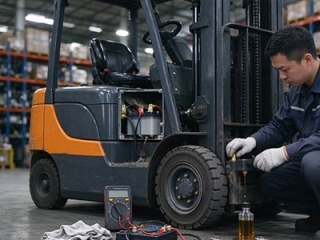 Reliability Of Newnewton Warehouse Forklifts For Heavy-Duty ShiftsWarehouse forklift reliability relies on industrial parts, reinforced frames and factory durability tests. Proper operation and maintenance reduce unexpected downtime.
Do you like ?0
Read more -
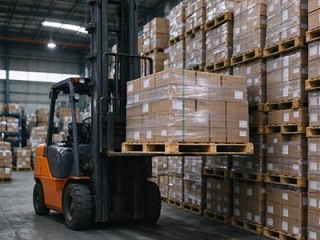 Forklift Configuration Strategy For Dense Warehousing, Warehouse ForkliftDense warehousing needs matched forklifts besides racks. Reach and trilateral stackers fit different layouts, coordinate aisle, load curve and floor for smooth handling.
Do you like ?0
Read more -
 Full Container Supply For Export Forklifts, Forklift ManufacturerBulk forklift orders for overseas can ship by FCL or LCL. Newnewton FCL offers stable freight, safer packing and mixed models for large purchases.
Do you like ?0
Read more -
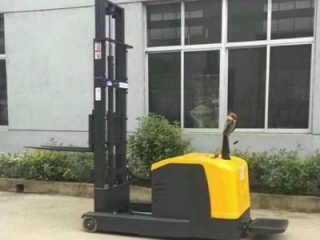 Stand-on Reach Stacker For Narrow Aisle Stacking, Mast Reach StructureStand-on reach stackers feature sliding masts that stay outside racks. They boost storage density in narrow aisles and require flat floors and standard pallets.
Do you like ?0
Read more -
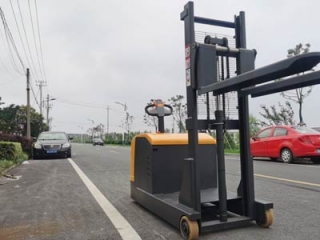 Stand-on Counterbalance Stacker For Various Pallets, Why No Leg RestrictionCounterbalance stackers have no front outriggers, using rear counterweight to avoid pallet interference. They fit various odd pallets yet need wider warehouse aisles.
Do you like ?0
Read more -
 Custom Walk-Behind Counterbalance Stacker | Non-Standard ModificationsStandard walk-behind counterbalance stackers struggle with non-standard pallets and tight aisles. Customize load, lift, forks and structure, share working conditions for safe design.
Do you like ?0
Read more








