
As a mobile and flexible handling tool, forklifts play a vital role in modern logistics. Ensuring the safety of forklift operations is crucial, requiring drivers to improve safety awareness, comply with operating procedures, and be proficient in driving techniques.
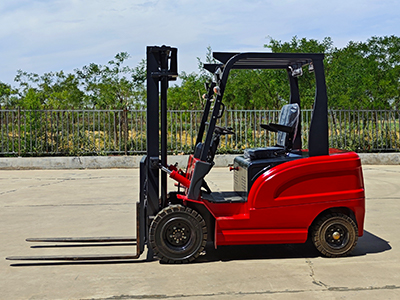
Key points for safe operation:
When driving on the edge of the platform, the wheels should be kept at least 0.3 meters away from the edge to prevent falling.
When reversing, you must look backwards, slow down, and watch out for road obstacles. Hitting an obstacle changes the direction of travel.
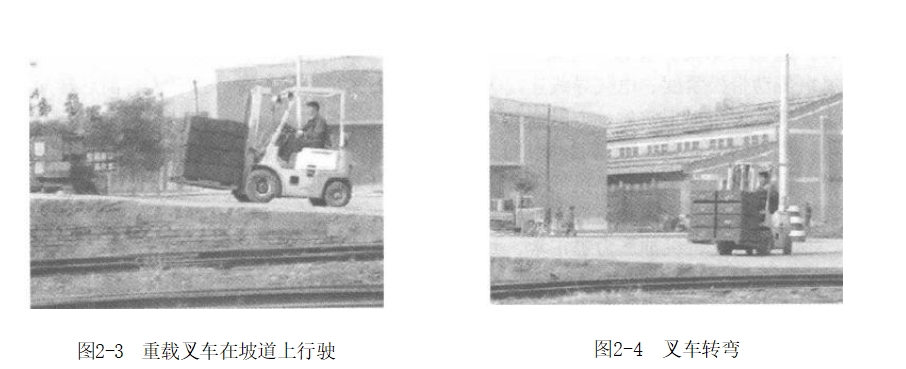
The speed should not be too fast when turning, otherwise it may lead to a rollover.
It is forbidden to pull other vehicles with forklifts to avoid forklifts being pulled off the platform by the end of the platform or obstacles.
When parking the forklift, be sure to tighten the parking brake and not park perpendicular to the line on the platform.
When working in a boxcar, the opening width of the door on the side without platform should be less than the width of the forklift. When the door is fully open, the door guard should be used.
When servicing, pay attention to burns caused by electric shock and electrolyte.
When the stack of goods is too high to obstruct the view, the driver is prone to ignore the safety above. Especially when the passage is narrow, the cargo may hit the pillars or other objects after traveling, causing personal injury. It is safer to go backwards than to go straight to the square.
The loading and unloading operation of forklifts can easily lead to non-operators pressing feet, squeezing hands, and falling. Drivers must concentrate and avoid driving at high speeds.
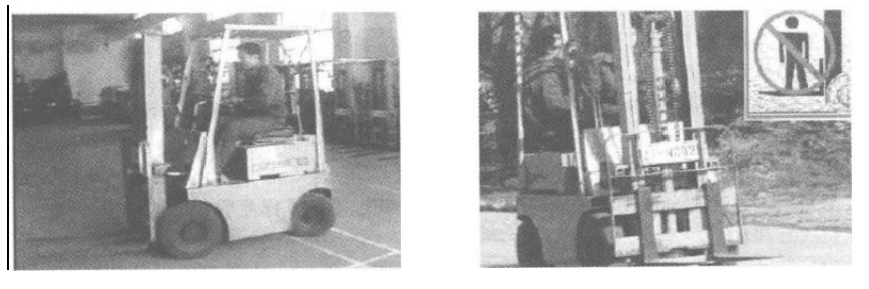
When operating the forklift, work clothes and safety protective equipment should be worn according to the regulations. It is forbidden to go shirtless, barefoot or wear sandals.
Make sure you get enough sleep before the shift and concentrate on the shift. It is forbidden to play or eat during work, and it is forbidden to smoke in the yard and warehouse.
It is forbidden to rest on the pallet.
The necessary number of people must be guaranteed for each vehicle, and a break of at least 10 minutes after every 2 hours of work is required.
Understand the packaging characteristics of goods and handle fragile goods with care.
If a broken tray is found, it should be repaired in time. Broken plates can make it difficult to enter the fork, causing the goods to collapse or crush.
Insufficient fork forward angle or inconsistent heights on both sides can lead to pallets being pushed or forks breaking the load.
When the goods are stacked on the pallet, they should be staggered and compacted tightly.
Installing side baffles on both sides of the pallet or stack prevents the goods from collapsing.
Tie goods to the gantry with ropes or anchor chains, suitable for fragile items, valuables or items with a skewed center of gravity.
When the forklift is moving, bumps and turns too fast can easily cause the goods to collapse.
Precautions for starting and driving:
Before starting, check coolant, fuel, oil, hydraulic oil, tire pressure, fan belt tightness, and electrical connections. Make sure no one is around and the steering stem is centered.
Starting time: no more than 5 seconds for forklifts and 15 seconds for tow trucks. When it is difficult to start in winter, you can pre-heat the hot water tank and engine oil to avoid using an open flame for baking.
After starting, the low-speed operation gradually warms up, and the sound, smoke exhaust, temperature, oil pressure, and whether there is water and oil leakage. Start it again after it is normal.
When starting, use low gear to accelerate slowly and avoid slamming the pedals. After starting, check the steering and braking to confirm that they meet the requirements before driving.
While driving, shift gears in time according to the situation and avoid using high-speed gears for a long time. It is forbidden to put your foot on the clutch pedal so as not to slip or burn the friction plate. When turning, sound the horn to slow down, and when changing directions, the vehicle must stop steadily.
When going downhill, put on a low gear and press the brake pedal intermittently. It is strictly forbidden to disengage the clutch or slide in neutral, and sharp turns are not allowed.
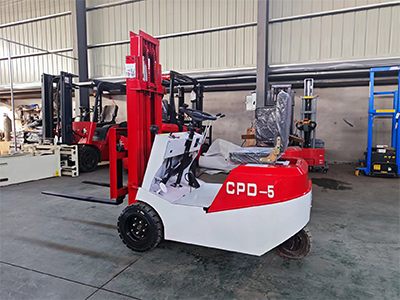
During the operation, the load shall not exceed the rated weight, and if abnormal noise or odor is found, it should be stopped immediately for inspection, and no faulty operation shall be allowed. It is forbidden to park forklifts on large ramps.
When lifting and driving, the mast should be tilted vertically or backward, and forward tilting is prohibited. When operating the joystick, avoid the cylinder piston reaching the end point, so as to avoid hydraulic shock damage to the system components.
After the operation, check and maintain the forklift according to the regulations, the fork lands, the oil cylinder is retracted, the gear lever is neutral, the parking brake is tightened, the power is turned off, and the key is removed. After winter operation, drain the coolant to prevent the cylinder and water tank from freezing and cracking.
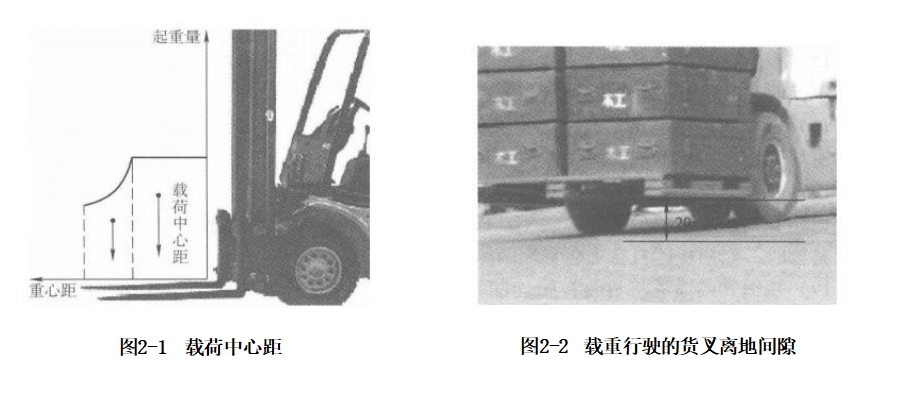
When loading and unloading goods, the center of gravity of the goods shall not exceed the center distance of the load. When the center of gravity is exceeded, it should be loaded according to the specified value.
When the load is driving, the fork is 20~30 cm off the ground, and the mast tilts back.
When the heavy-duty forklift is driving on the ramp, it drives in the forward direction uphill and reverses downhill.
When turning, slow down in advance to avoid scattering or overturning goods.
When changing directions, the vehicle must come to a standstill.
It is forbidden to carry people on the counterweight, stand under the fork, or send people to climb with forks.
When manipulating the mast, avoid "lifting" and "leaning".
Avoid eccentric loads and single-fork work during operation.
-
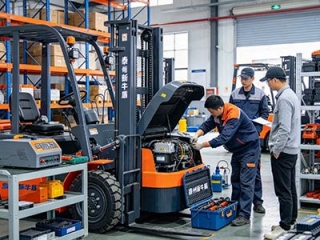 Taizhou newnewton Forklift Manufacturer IntroductionAvoid selecting warehouse forklifts only by unit price. Check site conditions, certificates and after-sales. Newnewton, Taizhou source factory, provides full product range, CE certification, customization and reliable spare parts supply.
Do you like ?0
Read more -
 Semi-electric Stacker vs Manual Stacker Cost ComparisonWhen buying stacking equipment for small warehouses, compare semi-electric stackers and manual stackers from cost, efficiency and maintenance to balance upfront expense and long-term investment.
Do you like ?0
Read more -
 CE Certification for Manual Hydraulic StackerNewnewton manual hydraulic stackers exported to EU need CE certification complying with 2006/42/EC and EN1757-1, including safety assessment, technical documents and product compliance checks.
Do you like ?0
Read more -
 Stand-on vs Walk-behind Electric Pallet Truck ComparisonUnderstand the differences between stand-on and pedestrian electric pallet trucks in operation, efficiency, aisle requirements and costs. Choose the right model based on warehouse scale, transfer distance and order volume.
Do you like ?0
Read more -
 Operation Notes for Electric Self Elevating TruckPedestrian electric stackers cover tiered brand options with different features. International brands offer stable performance at high cost, while domestic brands and factory suppliers provide better cost performance and customization.
Do you like ?0
Read more -
 Operation Notes for Electric Self-elevating Truck | Truck Mounted Forklift SafetTruck-mounted self-loading forklifts fixed on truck tails handle cargo without loading docks. Control load and cargo gravity, inspect equipment and avoid soft slopes to prevent tipping and falling goods.
Do you like ?0
Read more








