
Tired of Heavy Pushing? Electric Pallet Truck vs Manual Pallet Jack
Many warehouse buyers want to learn operation differences between electric pallet truck and manual pallet jack. Both handle pallet transport, yet they differ greatly in operation logic and suitable workloads. Understanding these operational gaps helps you pick the right material handling equipment for your workflow.
Manual pallet jacks run purely on human power. To lift loads, operators repeatedly pump the hydraulic lever, then push or pull the unit to move pallets. Steering also relies on manual force. They feel light without cargo, but heavy loads drain energy quickly. Operators get tired easily during long-distance or frequent transport tasks. They have a shallow learning curve. No complicated buttons are required. Staff only need to learn pumping and lowering valves, so they fit occasional, low-volume handling tasks.
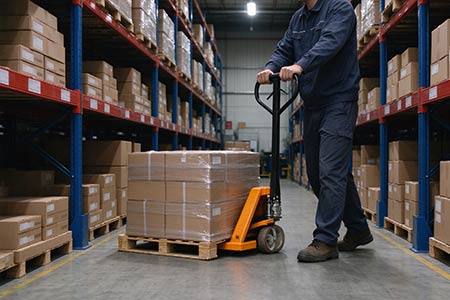
An electric pallet truck uses motors for travel and lifting. Operators hold the control handle and adjust speed and direction via buttons, with no physical pushing required for heavy goods. Lifting and lowering activate with electronic controls instead of manual pumping. It cuts physical strain significantly even under full load. Still, new users need brief training on throttle buttons, emergency stops and battery checks. Basic charging and maintenance knowledge are also necessary.
For steering, a manual pallet jack gets harder to turn as load weight rises. An electric pallet truck comes with power steering, making sharp turns effortless even with heavy pallets. It shines for continuous, long-run handling.
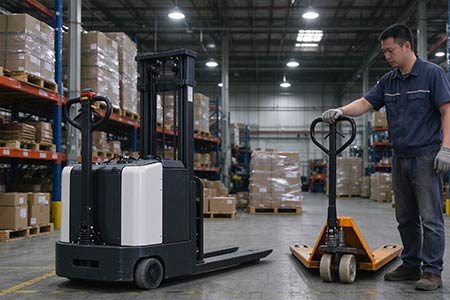
Safety rules also separate the two types. Operators of manual pallet jacks mainly manage travelling speed to avoid load slippage. When comparing operation differences between electric pallet truck and manual pallet jack, safety control is a non-negligible part. Electric pallet trucks have built-in speed limits; workers must watch for obstacles and avoid sudden stops or sharp turns.
For application scenarios, manual pallet jacks work well for small warehouses and infrequent moves with tight budgets. An electric pallet truck is widely used in e-commerce warehouses and production lines with high daily throughput. Choose an pallet truck if your team runs heavy handling shifts. A manual pallet jack offers better value for rare restocking jobs. Share your daily handling volume and travel distance, and we can recommend the better option.
-
 How to Choose a Source Factory of Semi-electric Stacker Forklift for ExportOverseas buyers of semi-electric stackers should look beyond price. Verify CE certificates, lead time, custom options and after-sales support to avoid invalid certificates and delivery delays.
Do you like ?0
Read more -
 What Parameters to Check When Selecting a Narrow Aisle Manual Hydraulic StackerFor small narrow-aisle warehouses, do not only focus on rated capacity when buying manual hydraulic stackers. Check leg width, ground clearance, lift height and fork size for intermittent light and medium stacking.
Do you like ?0
Read more -
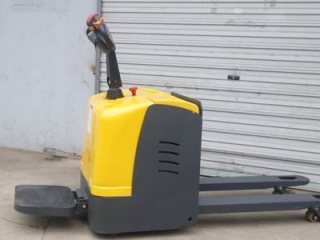 How to Maintain a Stand-on Full Electric Pallet Truck for Heavy Warehouse UseStand-on electric pallet trucks under heavy workloads suffer weak lifting, jerky travel and short battery life without proper care. Pre-shift checks and regular maintenance cut downtime and extend service life.
Do you like ?0
Read more -
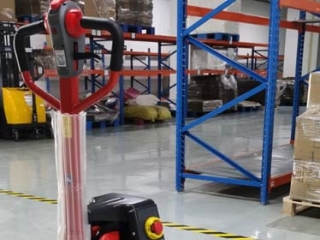 Small Warehouse Handling: Lithium-ion Walk-behind Electric Pallet TruckLithium walkie electric pallet trucks with compact size navigate 1.6m aisles for e-commerce and component warehouses. Intermittent charging is available, check its working limits before purchase.
Do you like ?0
Read more -
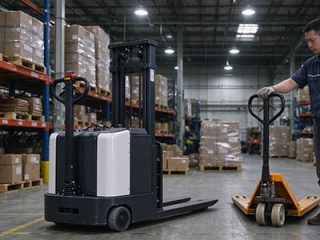 Tired of Heavy Pushing? Electric Pallet Truck vs Manual Pallet JackBoth electric pallet trucks and manual pallet jacks move pallets, yet they differ greatly in operation and labor effort. Manual types rely on manpower, while electric models use motors for easy long-distance heavy loads.
Do you like ?0
Read more -
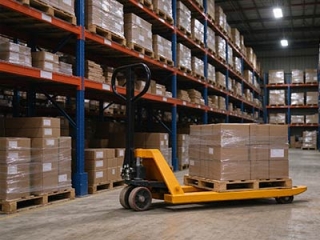 Galvanized Anti-Rust Manual Pallet Jack For Humid And Corrosive WorkshopHand pallet trucks rust easily in humid or salty areas. Paint, hot-dip galvanizing and stainless steel offer different anti-corrosion levels for your budget.
Do you like ?0
Read more








