1、 Maintenance of power type batteries for Jiangsu Taixing New Newton electric forklifts. The maintenance of power type batteries is basically the same as that of starting type batteries. In order to keep the batteries in good condition and extend their service life, special attention should be paid to the following aspects during battery use. When disassembling and handling batteries, precautions should be taken, and the batteries should be securely fixed on the vehicle@ The electrolyte should be pure to prevent dust from entering the interior of the battery. The dust and dirt on the surface of the battery should be regularly wiped off, and the vent hole of the liquid filling port should be kept unobstructed; 3. Timely remove corrosion from wire joints and pole posts, and tighten the joints; 4. Regularly check the density and liquid level of the electrolyte, and regularly check the discharge degree of the battery. Discharge in summer should not exceed 50%, and discharge in winter should not exceed 25%; Otherwise, supplementary charging should be carried out in a timely manner. The specific maintenance methods are shown in the table below:
Regular maintenance schedule for power type batteries
|
Maintenance project |
Maintenance content |
tool |
Every day |
weekly |
monthly |
3 months (600 hours) |
6 months (1200 hours) |
|
move |
Electrolyte level |
visualization |
|
0 |
0 |
0 |
0 |
|
Specific gravity of electrolyte |
Hydrometer |
|
0 |
0 |
0 |
0 |
|
|
Battery level |
|
0 |
0 |
0 |
0 |
0 |
|
|
Is the wiring terminal loose |
|
0 |
0 |
0 |
0 |
0 |
|
|
Is the connecting wire loose |
|
0 |
0 |
0 |
0 |
0 |
|
|
Battery surface cleaning |
|
0 |
0 |
0 |
0 |
0 |
|
|
Is the ventilation cover tightened, |
|
|
0 |
0 |
0 |
0 |
|
|
Stay away from fireworks |
|
0 |
0 |
0 |
0 |
0 |
|
|
Note: "0" in the table represents inspection, correction, and adjustment. |
|||||||
2、 Diagnosis of common faults in the power type battery of Jiangsu Taixing New Newton electric forklift. The common fault diagnosis of power type batteries is shown in the table below:
Diagnosis of common faults in power type batteries
|
Fault phenomenon |
Fault characteristics |
Fault cause |
Diagnostic measures |
|
Reduced capacity |
Unable to reach rated capacity or insufficient capacity |
Insufficient charging or recharge after use |
Balanced charging and improved operation methods |
|
Low electrolyte density |
Adjusting electrolyte density |
||
|
External wiring is blocked and has high resistance |
Streamline external wiring and reduce resistance |
||
|
Gradually decreasing capacity |
Severe vulcanization of the electrode plate |
Repeated charging to eliminate plate sulfation |
|
|
Electrolyte has impurities |
Check the electrolyte and replace it if necessary |
||
|
Local short circuit of battery |
Repair or replace |
||
|
Sudden decrease in capacity |
Short circuit inside or outside the battery |
Check the cause and eliminate it |
|
|
Voltage |
The voltage of the battery is too high during charging, and the voltage drops quickly during discharge |
Plate sulfation |
Eliminating plate sulfation |
|
The open circuit voltage of the battery significantly decreases during use |
Reverse polarity or short circuit |
Check the voltage of the individual battery |
|
|
give off steam |
At the end of battery charging, there is no or little gas flow |
Charging current too low or battery charging insufficient |
Adjust the charging current and continue charging |
|
Does not emit gas after charging the battery |
Short circuit inside the battery |
Check and eliminate |
|
|
The battery deflates too early and has large bubbles during charging |
Plate sulfation |
Eliminating plate sulfation |
|
|
The battery emits gas during placement or discharge |
Discharge immediately after charging or impurities in the electrolyte |
Leave it for about an hour to discharge or replace the electrolyte |
|
|
High electrolyte temperature |
Abnormal increase in liquid temperature during normal charging |
Excessive current or internal short circuit during charging |
Adjust charging current or eliminate short circuits |
|
Individual electrical temperatures are higher than usual |
Plate sulfation |
Eliminating plate sulfation |
|
|
Abnormal electrolyte density and color |
The density of the battery increases little or remains unchanged during charging |
Plate sulfation |
Eliminating plate sulfation |
|
After charging and discharging the battery, the density decreases significantly during storage |
Battery self-discharge is serious |
Replace the electrolyte |
|
|
The color and odor of the electrolyte are abnormal, and there are turbid deposits |
The electrolyte is impure and the active substance falls off |
Replace the electrolyte and rinse the inside of the battery |
-
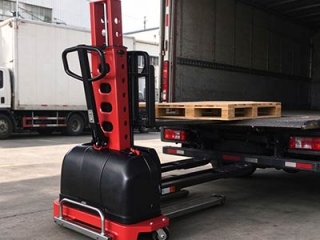 Operation Notes for Electric Self-elevating Truck | Truck Mounted Forklift SafetTruck-mounted self-loading forklifts fixed on truck tails handle cargo without loading docks. Control load and cargo gravity, inspect equipment and avoid soft slopes to prevent tipping and falling goods.
Do you like ?0
Read more -
 Warehouse Double Pallet Truck vs Standard Pallet JackDouble pallet jacks differ greatly from standard models in applicable working conditions. Double pallet jacks deliver higher handling efficiency but require wider aisles and better floors, while ordinary jacks are compact and cost-effective for general wa
Do you like ?0
Read more -
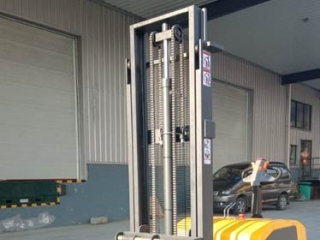 Stand-on Reach Stacker Pros & Cons for Narrow Aisle High-rack WarehousingStand-on reach stackers suit dense narrow-aisle warehouses with a movable mast and 6-meter maximum lifting height. They boost storage capacity but feature complex structures, higher maintenance costs and stricter floor requirements.
Do you like ?0
Read more -
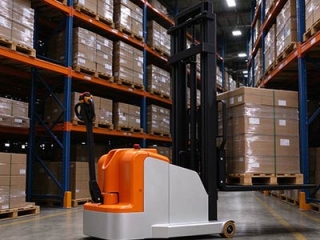 Walk-behind Counterbalance Stacker Wholesale Cost & Warehouse Buying GuideStand-on reach stackers suit dense narrow-aisle warehouses with a movable mast and 6-meter maximum lifting height. They boost storage capacity but feature complex structures, higher maintenance costs and stricter floor requirements.
Do you like ?0
Read more -
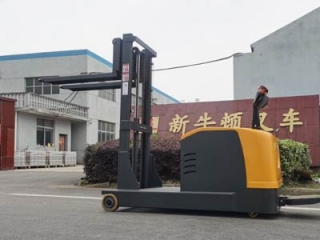 Legless Stand-on Counterbalance Stacker Minimum Stacking Aisle Parameter GuideStand-on counterbalance stackers rely on counterweights for stability without support legs. Its right-angle stacking aisle ranges from 1900mm to 2200mm, requiring reasonable spacing planning for safe operation.
Do you like ?0
Read more -
 Narrow Aisle Walkie Electric Pallet Jack Wheel Replacement StepsTire wear of pedestrian electric pallet trucks in narrow aisles easily causes slipping and shelf collision issues. Standardize the full tire replacement process and maintenance steps to ensure stable operation.
Do you like ?0
Read more