PWM Speed Control Principle Of Forklift Motor | CURTIS Controller
Most electric forklifts adopt PWM pulse width modulation for stepless speed regulation, which is the core technology of CURTIS controllers. Many practitioners only know the controller but lack knowledge of its working logic. This article fully explains the PWM Speed Control Principle Of Forklift Motor.
Definition of PWM Speed Regulation
PWM stands for Pulse Width Modulation. The controller outputs high-frequency intermittent DC power with fixed voltage but adjustable duty cycle:
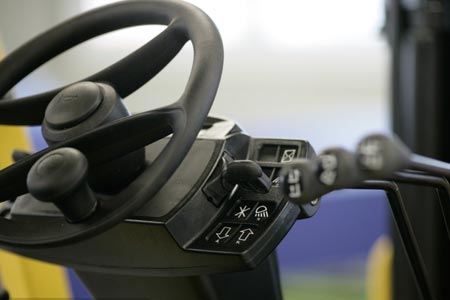
Slightly turn the handle: Short power-on time, long power-off time, low average power, motor runs at low speed;
Push the handle to full speed: Duty cycle close to 100%, average voltage reaches rated value, motor operates at full speed.
In short, the system switches power on and off rapidly. By adjusting the power-on duration, it smoothly changes the average motor speed to realize stepless speed control.
Complete Control Logic of Electric Forklift
The operating handle sends a 0–5V analog signal to the controller mainboard;
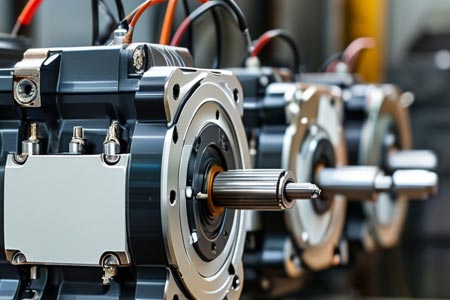
The mainboard calculates the matching pulse duty cycle according to signal value;
High-power MOS tubes switch on and off at high frequency to deliver intermittent pulse power to the DC motor;
The motor armature receives continuously variable average voltage, enabling smooth speed adjustment without gears;
Freewheeling diodes absorb reverse voltage generated during power-off to prevent controller breakdown.
Advantages of PWM Over Traditional Resistance Speed Regulation
Energy-saving: No heat loss from resistors, battery runtime increased by 12%-18%;
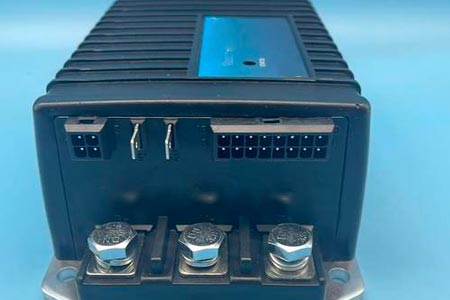
Smooth operation: No sudden jerk on startup to avoid cargo tipping;
Lower failure rate: Low controller temperature, rarely triggers thermal protection during long shifts;
Stable torque: Sufficient traction at low speed for climbing and heavy loads.
Actual Test Data
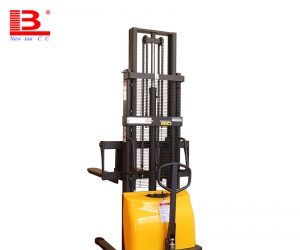
On the same walk-behind stacker equipped with a PWM controller, the controller surface temperature stays below 55℃ after 4 hours of continuous operation. Under identical working conditions, old resistance-type controllers exceed 80℃ and frequently shut down due to overheating protection.
Energy efficiency, smooth startup and low heat generation of Electric Forklift all rely on the PWM control system. Feel free to leave your technical questions below.
-
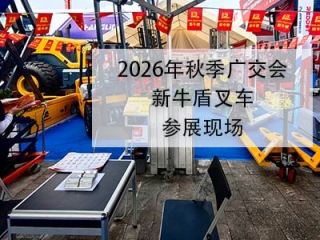 Newnewton Forklift Export, Canton Fair Electric Warehouse Forklift ManufacturerAt the 140th Canton Fair, Newnewton displays full electric warehouse equipment, including cold storage and explosion-proof models with CE, OEM and export support.
Do you like ?0
Read more -
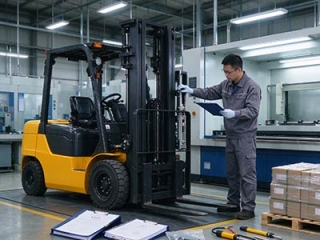 Electric Forklift Factory Direct Quotation, Warehouse Handling EquipmentSame model electric forklifts have varied quotes due to different configurations. Provide load, lift, working conditions and certifications for accurate direct factory pricing.
Do you like ?0
Read more -
 5 Common Working Scenarios for Customized Warehouse Forklift SolutionsStandard forklifts fail to fit special warehouse conditions. The factory offers customization for narrow aisles, cold rooms, explosion-proof and outdoor heavy-load scenarios.
Do you like ?0
Read more -
 What Tests Are Conducted Before Explosion Proof Forklift DeliveryExplosion-proof forklifts are for flammable and dusty warehouses. They pass strict tests on structure, electrics, temperature and hydraulics before delivery.
Do you like ?0
Read more -
 How to Maintain Internal Combustion Forklift in Cold WinterInternal combustion forklifts suffer hard starting and fuel icing in cold weather. Maintain fuel, oil, battery and cooling systems for winter use.
Do you like ?0
Read more -
 2 Ton Sit-down Reach Stacker, Sit-on Electric Reach Stacker2-ton seated reach stackers fit narrow aisle high rack warehouses. Its extending mast works for two-shift stacking; watch aisle size and high lift capacity deration.
Do you like ?0
Read more