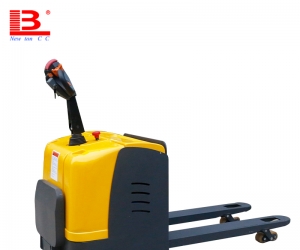
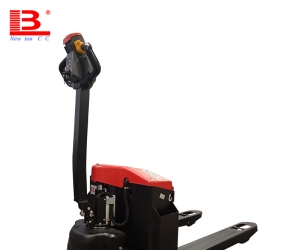
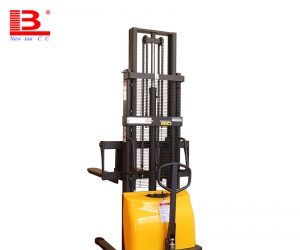
Small Warehouse & Limited Budget? This Semi-electric Stacker Is Perfect for You
Many small business owners and small warehouse managers share the same problem: they want to improve efficiency but worry that equipment is too expensive, too bulky or too difficult to operate. There’s no need to hesitate — the walk-behind semi-electric stacker is designed exactly for these scenarios. With clear advantages, it perfectly matches low-frequency, short-distance and low-budget needs.
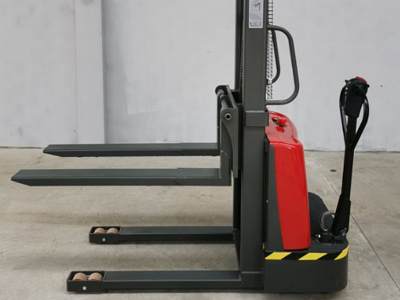
We are often asked: What size warehouse is a semi-electric stacker suitable for?
Our advice: it works extremely well for most small and medium-sized warehouses, except large-scale logistics centers. The small 1-ton semi-electric stacker, in particular, is lightweight, flexible and easy to control. It is highly friendly to narrow and compact spaces with excellent passability, while maintaining high working efficiency.
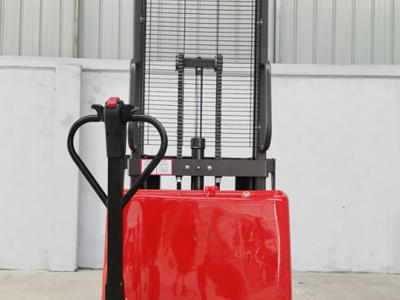
This machine requires no complicated operation — the operator simply walks behind it. Lifting is powered by electric assistance, so handling goods no longer strains your back or requires heavy physical effort. It is stable and safe for routine stacking, racking and short-distance transfer, and much more convenient than manual stackers! Although it still needs basic human operation, the overall workload is greatly reduced.
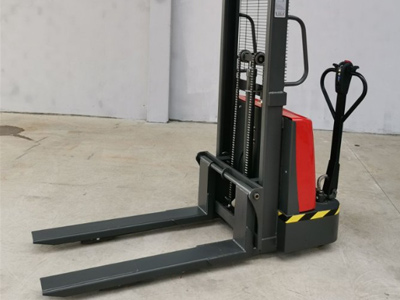
With obvious advantages, this equipment significantly improves workshop efficiency and adapts to various working scenarios. Equipped with reliable brand batteries and motors, it delivers stronger performance in working duration, efficiency and stability, maximizing value while avoiding unnecessary cost and time waste.
Small warehouses should avoid over-equipment. Large, expensive and complex machines only increase costs and trouble. Choosing a suitable semi-electric stacker that is capable, user-friendly and durable is the most practical choice. If you have a small warehouse and need cost-effective, easy-to-operate handling equipment, you should definitely learn more about the small 1-ton semi-electric stacker!
-
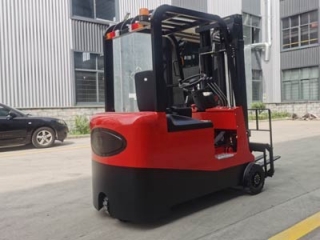 Does 3‑Wheel Full‑Electric Forklift Tend To Tip OverThree‑wheel forklifts fit 2.8‑3.2m narrow aisles under TSG 81‑2022. Lower lateral stability raises rollover risks from offset load, fast turning and ramp operations.
Do you like ?0
Read more -
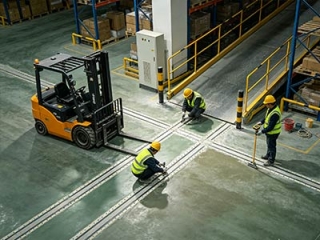 4 Hidden Costs When Deploying Unmanned AGV ForkliftWarehouse AGV forklift projects involve hidden costs including floor renovation, system integration and commissioning. Evaluate full expenses in advance to avoid large‑scale budget deviations.
Do you like ?0
Read more -
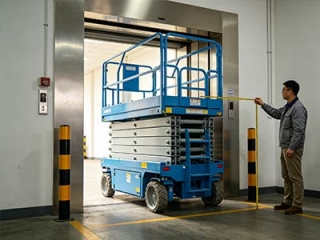 Key Parameters For Sourcing 8‑m Self‑Propelled Scissor Lift PlatformWhen selecting scissor lifts, distinguish working height from platform height per GB/T 25849. Check load capacity and access dimensions to prevent on‑site operation failures.
Do you like ?0
Read more -
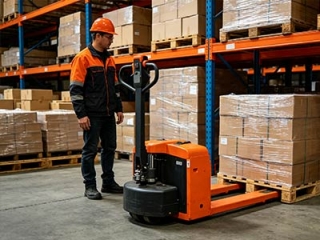 Features & Warehouse Application Of Electric Double Pallet JackElectric dual‑pallet trucks carry two pallets at once to ease aisle congestion and save costs. Designed for double‑sided pallets with specific aisle and floor requirements for high‑turnover warehouses.
Do you like ?0
Read more -
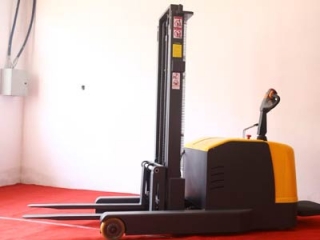 6 Practical Battery‑Maintenance Tips For Rider‑Operated Reach StackerReach‑truck range loss is not always battery failure. Charging, temperature and storage affect lifespan. Standardize lead‑acid & lithium‑ion maintenance to cut repair costs.
Do you like ?0
Read more -
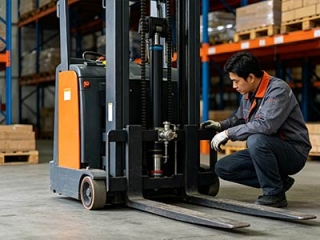 5 Common Malfunctions & Solutions For Semi‑Electric StackerOnline electric forklift rankings are merely reference. Three brand tiers are available; evaluate working conditions, budget and after‑sales for heavy‑duty work or custom demands.
Do you like ?0
Read more