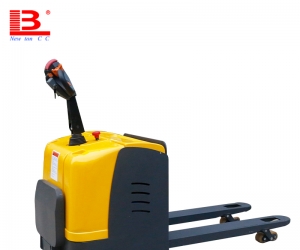
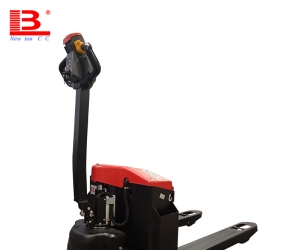
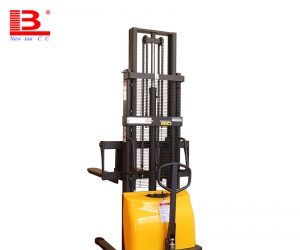
Customized full‑electric reach forklift perfectly adapts to high‑stacking operations in narrow‑aisle warehouses. Beyond simple appearance adjustment, professional customization focuses on structural non‑standard optimization. Matched precisely with on‑site parameters, customized sit‑down reach stacker delivers higher stability, stronger adaptability and lower failure rates for intensive warehouse tasks.
1. Measure Actual Warehouse Conditions to Confirm Overall Dimensions
Complete on‑site data collection before customization, including minimum working aisle width, warehouse net height and beam spacing. Never rely solely on theoretical manual values. Practical safety clearance between racks and equipment must be reserved.
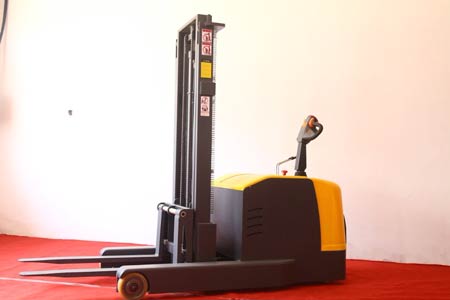
For extremely narrow aisles, compact body optimization is available. However, body compression cannot be done blindly. Manufacturers must verify counterweight parameters simultaneously to guarantee stable travelling and stacking performance, avoiding collision and tipping risks.
2. Calculate High‑Lift Load Derating & Match Mast and Counterweight
Most buyers overlook load attenuation at high lifting heights. According to GB/T 26949 industrial vehicle stability standards, actual safe load capacity decreases as mast height rises. When customizing elevated masts, refer to actual load curve data at different heights instead of only nominal rating.
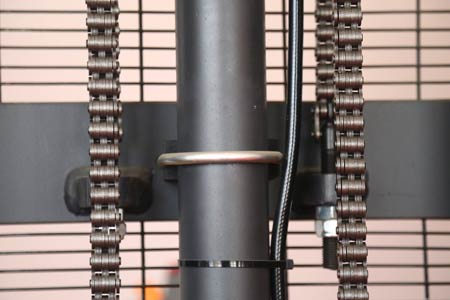
Mast steel specification and counterweight weight must be upgraded synchronously with lifting height. Simply raising the mast without structural optimization causes gravity offset and greatly increases safety hazards during high‑level cargo handling.
3. Customize Attachments & Electrical System for Specific Cargo and Environment
Customize fork length, width and side shifters for irregular goods. Extended forks aggravate load attenuation, so updated load curves are required to prevent pallet slipping and falling.
Select lead‑acid or lithium batteries according to shift schedules. Cold‑storage sites can be equipped with low‑temperature batteries and cold‑resistant wiring. Avoid overspeeding traveling and lifting parameters. Moderate speed setting matches narrow‑aisle high‑lift scenarios and effectively prevents rack collision.
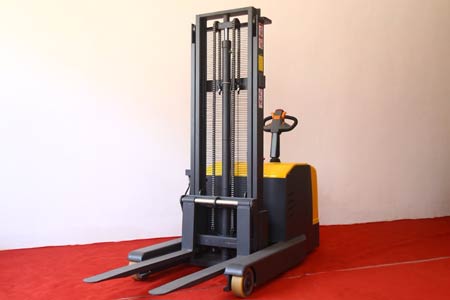
4. Verify Compliance Documents, Prototype Test & After‑Sales Terms
Structural modifications such as mast and counterweight adjustment invalidate standard certificates. Domestic usage must comply with TSG 81‑2022 industrial vehicle regulations. Export orders require updated complete CE technical files with qualified nameplates, load curves and inspection records.
For bulk orders, confirm and test prototypes first. Complete aisle passing and high‑stacking simulation before mass production. Clearly define customized modification lists, delivery cycles and warranty scope for standard and non‑standard parts. Ensure the factory provides complete drawings and sustainable spare‑part supply.
Customized sit‑down reach stacker solves narrow‑aisle high‑lift efficiency challenges with stable and safe performance. Contact us for free professional customization solutions.
-
 Walk‑Behind Electric Pallet Truck | Operation Instruction GuideHigh‑frequency warehouse operation of pedestrian electric pallet trucks follows 7 standard steps. Standardize inspection, handling and shutdown to reduce cargo slipping and equipment failure risks.
Do you like ?0
Read more -
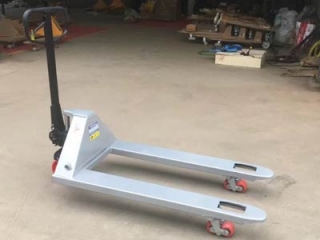 Manual Hydraulic Pallet Truck | Wholesale From Pallet Jack FactoryAvoid unit‑price‑only comparison for bulk manual pallet truck orders. Follow JB/T3341 standard, check steel frame, welding and hydraulics to evade shoddy low‑cost products.
Do you like ?0
Read more -
 Walk‑Behind Counterbalance Stacker | Leg‑Free Forklift ManufacturerSingle‑sided enclosed pallets match legless pedestrian counterbalance stackers. Reliable factories provide structural verification, OEM, CE documents and direct after‑sales support.
Do you like ?0
Read more -
 Diesel Forklift Won’t Start | Common Troubleshooting & Repair TipsDiesel forklift fails to start mainly due to fuel, circuit, air intake and preheating issues. Check basic items yourself and leave severe mechanical faults to professionals.
Do you like ?0
Read more -
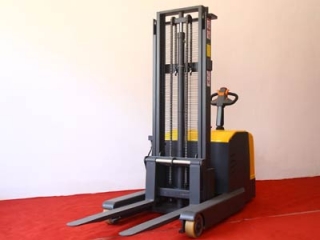 Sit‑Down Reach Stacker | Custom Full‑Electric Reach ForkliftCustom reach forklifts fit narrow high‑bay warehouses. Measure on‑site conditions, calculate high‑lift load loss, verify configurations and conduct prototype tests for stable and safe operation.
Do you like ?0
Read more -
 Electric Self‑loading Stacker | Electric Forklift ManufacturerOverseas dealers buying self‑loading trucks in bulk should source from factories. Get written warranty, genuine spare parts and technical support for smoother after‑sales service.
Do you like ?0
Read more