How to Operate a Full Electric Walk-Behind Stacker? Operation Guide (2026)
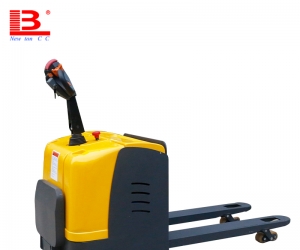
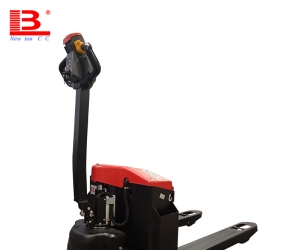
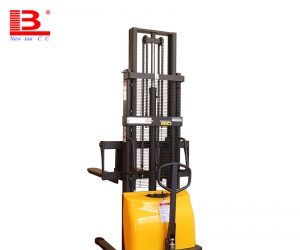
In 2026, the electric walk-behind stacker has been increasingly widely used in front-line logistics scenarios such as warehouses and workshops. With its simple operation, labor-saving and high-efficiency characteristics, it has won unanimous praise from the majority of logistics practitioners! However, new operators often have a question: how to operate a full electric walk-behind stacker? In fact, you can easily get started as long as you master a few key steps.
Before Operation
Check the vehicle’s power, tires, forks and hydraulic system in advance, ensure there are no obstacles around, wear necessary protective equipment, and stand in a stable position on the side of the equipment.
When Starting
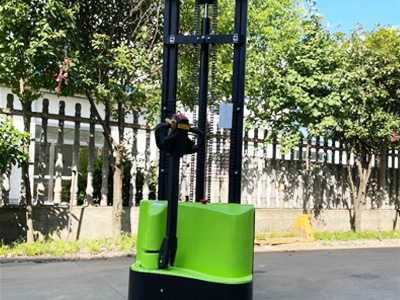
Turn on the power switch, gently lift the handle to a suitable angle, and slowly toggle the speed control switch to make the vehicle move smoothly. It should be noted that the electric walk-behind stacker is easy to operate, with a precise handle controller. Forward, backward and steering are all flexible, and it can easily turn in narrow aisles.
When Forking Goods
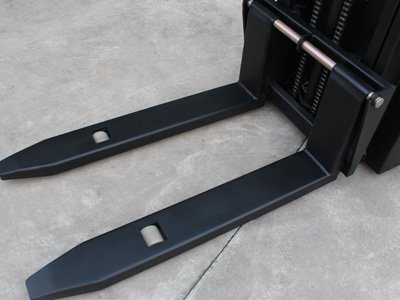
First, adjust the forks to a suitable width, slowly drive under the pallet, toggle the lifting switch to lift the forks, and make the goods leave the ground stably. It is worth noting that you should keep a low speed during driving, do not start or stop suddenly to avoid goods shaking, which is also to protect your own safety.
When Stacking or Unloading
Stop the vehicle stably after approaching the shelf, control the forks to rise to the corresponding height, slowly send the goods to the designated position, then lower the forks and exit.
After Operation
Lower the forks to the lowest position, turn off the power, and park the electric walk-behind stacker in the designated area.
As long as you pay attention to these operation points of the electric walk-behind stacker, the operation will be very easy and simple, while ensuring safety and high efficiency.
-
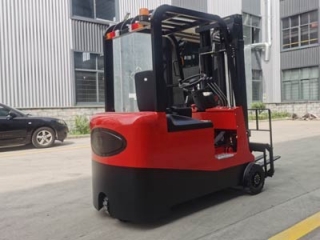 Does 3‑Wheel Full‑Electric Forklift Tend To Tip OverThree‑wheel forklifts fit 2.8‑3.2m narrow aisles under TSG 81‑2022. Lower lateral stability raises rollover risks from offset load, fast turning and ramp operations.
Do you like ?0
Read more -
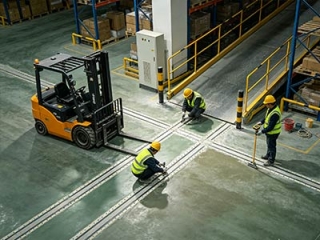 4 Hidden Costs When Deploying Unmanned AGV ForkliftWarehouse AGV forklift projects involve hidden costs including floor renovation, system integration and commissioning. Evaluate full expenses in advance to avoid large‑scale budget deviations.
Do you like ?0
Read more -
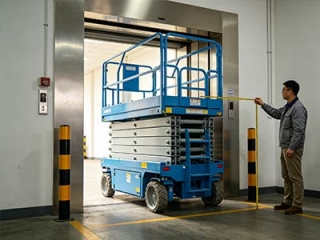 Key Parameters For Sourcing 8‑m Self‑Propelled Scissor Lift PlatformWhen selecting scissor lifts, distinguish working height from platform height per GB/T 25849. Check load capacity and access dimensions to prevent on‑site operation failures.
Do you like ?0
Read more -
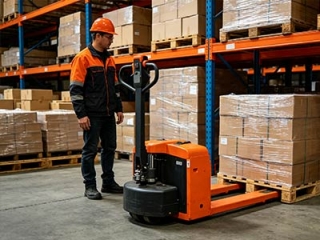 Features & Warehouse Application Of Electric Double Pallet JackElectric dual‑pallet trucks carry two pallets at once to ease aisle congestion and save costs. Designed for double‑sided pallets with specific aisle and floor requirements for high‑turnover warehouses.
Do you like ?0
Read more -
 6 Practical Battery‑Maintenance Tips For Rider‑Operated Reach StackerReach‑truck range loss is not always battery failure. Charging, temperature and storage affect lifespan. Standardize lead‑acid & lithium‑ion maintenance to cut repair costs.
Do you like ?0
Read more -
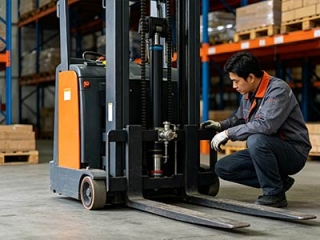 5 Common Malfunctions & Solutions For Semi‑Electric StackerOnline electric forklift rankings are merely reference. Three brand tiers are available; evaluate working conditions, budget and after‑sales for heavy‑duty work or custom demands.
Do you like ?0
Read more