Manual Pallet Truck With Scale | Calibrate Inaccurate Weighing
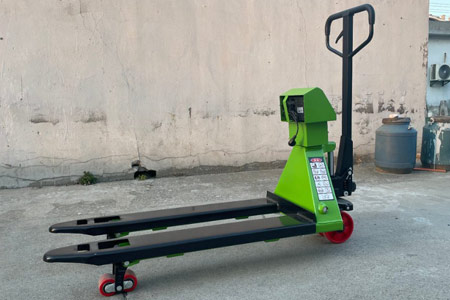
manual pallet truck with scale integrates cargo transportation and weighing functions. It is widely adopted for warehouse receiving, outbound inventory checking and logistics piece-count settlement. Operators frequently face weighing deviation issues. This article sorts out fault causes and standard procedures to calibrate scaled pallet truck inaccurate weighing.
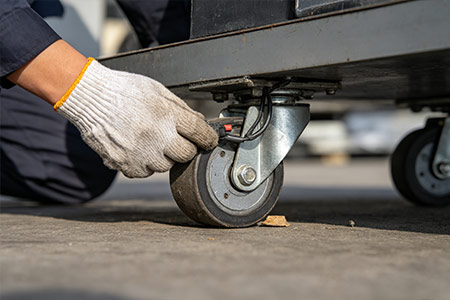
Before formal calibration, eliminate external influencing factors to avoid ineffective adjustment: Unqualified ground surface: Weighing must be carried out on flat and solid cement ground. Slopes, potholes, rubber mats and cracked ground lead to uneven force bearing and persistent weighing errors. Weighing on pallets or skids is prohibited. Foreign objects stuck around wheels and chassis: Clean plastic ropes, iron wires and gravel tangled in wheel gaps and under the chassis. Objects propping up the chassis cause abnormal force on sensors and continuous value drifting.
Offset cargo placement: Place goods at the center of forks. Unilateral load creates obvious weighing deviation. Do not place heavy loads at the tip of forks. Deformed mechanical components: Severe impact may bend forks or truck frames and change the force structure of sensors. Calibration alone cannot fix the problem; mechanical maintenance is required. Low battery power: Low voltage of the indicator causes unstable readings and value jumping. Fully charge the device before weighing and calibration.
If readings remain inaccurate after above checks, follow the steps below for adjustment: Step 1: Zero calibration under no load Place the scaled pallet truck horizontally with no load on forks. Power on and wait for the indicator to stabilize. If the reading is not zero, perform zero/tare function first. If zero cannot be achieved persistently, check whether sensor cables are loose or damaged.
Step 2: Access calibration mode Button operations vary among different indicator brands. General operation logic: After startup and stabilization, long press the Zero or Calibration button for 3–5 seconds to enter calibration menu. Some models require combined buttons (Tare + Zero). Refer to the original indicator manual.
Step 3: Zero point calibration with empty load When the screen shows “No Load”, confirm no goods on forks and press confirm to save zero parameters.
Step 4: Load weight calibration (core procedure) Place standard weights steadily at the center of forks and wait for stable readings following on-screen prompts. Input the actual weight value of standard weights and press confirm. Example: If using 1000kg standard weights, enter 1000 after value stabilizes and save data.
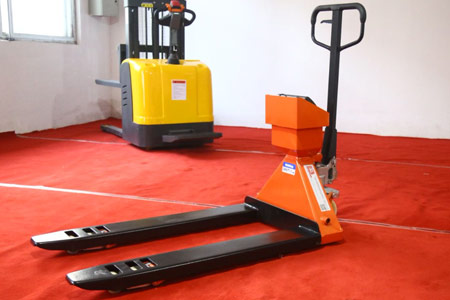
Step 5: Save parameters and exit calibration mode Select Save after finishing calibration, then power off and restart the indicator. Verify zero reading under empty load, repeatedly test with standard weights to check whether weighing error falls within allowable range (±0.1%–0.2% for regular industrial models).
If button layout of your manual pallet truck with scale differs from the above process, contact us to confirm the exact operation steps for easy and correct calibration.
-
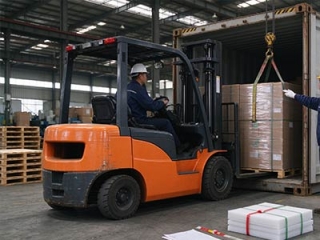 Newnewton Forklift Manufacturer, Forklift CE Certification for ExportNewnewton forklift factory offers full CE certification complying with EN ISO 3691, complete technical documents and OEM service to reduce customs detention risks.
Do you like ?0
Read more -
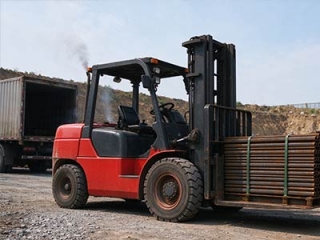 Electric Forklift Vs Diesel Forklift, Warehouse Selection GuideElectric forklift is zero-emission and quiet for indoor clean warehouses. Diesel forklift offers strong power for outdoor heavy-duty tasks.
Do you like ?0
Read more -
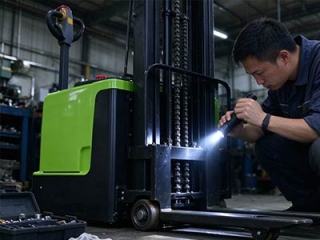 Narrow Aisle Stacker Forklift Custom Manufacturer for WarehouseCustom narrow aisle stacker for non-standard racking. Adjust body, mast and fork specs, upgrade power and protection, site survey available.
Do you like ?0
Read more -
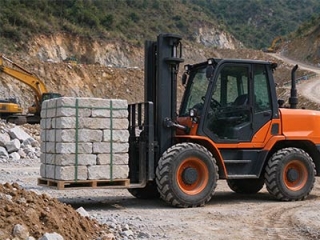 4WD All Terrain Rough Terrain Forklift Climbing for Mountain Sites4WD rough terrain forklift works on unpaved roads. Observe load climbing limit, attachments optional for forest and construction sites.
Do you like ?0
Read more -
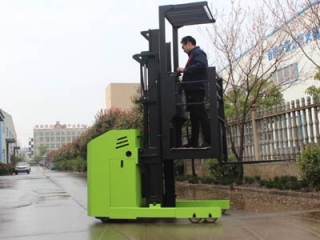 Man-Up Order Picker for High Level Picking, Suitable Warehouse ModesMan-up high level order picker for high-level split picking. Not for full pallet stacking, check rack, aisle and floor before selection.
Do you like ?0
Read more -
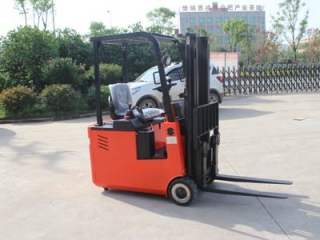 Narrow Aisle Operation Of Three-Wheel Forklift With Compact Turning RadiusThree-point electric forklift features small turning radius for narrow aisles. Reserve safety margin and check floor condition during selection.
Do you like ?0
Read more