
What are the applicable scope of the hand-push hydraulic stacker?
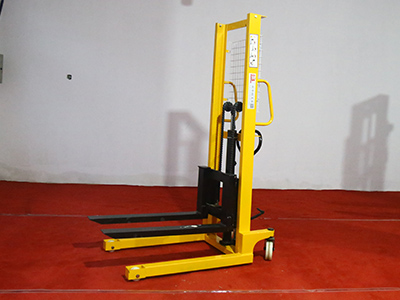
In many cognitions, we have a fixed way of thinking about such mechanical things, and this determines where we use them wherever we see them. Take our hand operated forklift as an example. We generally know for sure that such a car is used in some transportation and warehouses. We see it in too many places and think it is useful. Otherwise, some of our hand-push hydraulic stackers can also be used in other places. Forklift manufacturers will popularize them for us, so that we can also know and choose.
The hand operated forklift is actually an industrial vehicle. The utility model has the advantages of simple structure, flexible control, good fretting and high explosion-proof safety performance. It is suitable for operations in narrow passages and limited spaces, and is an ideal equipment for palletizing in high-bay warehouses and workshops. It can be widely used in petroleum, chemical, pharmaceutical, textile, military, paint, pigment, coal and other industries, as well as places containing explosive mixtures such as ports, railways, freight yards, warehouses, etc., and can enter cabins, carriages and containers for palletized goods Forklift manufacturers tell us that these are all available for this car, which has a wider range of uses than we know, and is an indispensable equipment in every place.
The hand operated forklift adopts advanced spraying technology, which improves the appearance of the product and increases the durability of the manual hydraulic stacker. A pollution-free manual hydraulic stacker has the characteristics of smart transportation, flexible operation and small turning radius. It is suitable for production factories, production workshops, warehouses, stations, docks, airports and other places, especially suitable for sites with fire and explosion-proof requirements, such as printing workshops, various oil depots, chemical warehouses and other places. Combined with pallets, containers, etc., unitized transportation can be realized, which not only reduces collisions, scratches, etc., but also reduces workload and stacking area, greatly improving work efficiency.
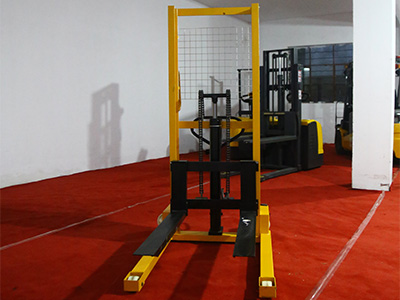
To a certain extent, the manual hydraulic stacker has replaced the electric one, because some of its unloading equipment is still very perfect, and the crowd is also considered from this aspect, so it is not compared by the electric vehicle.
-
 License Requirement for Warehouse Stand-on Counterbalance StackerWhether ride-on counterbalance stackers require operation certificates depends on equipment type. Operators need N1 forklift licenses for specified models to avoid regulatory risks.
Do you like ?0
Read more -
 Safety Guide for Indoor Charging of Walk-behind Electric StackerImproper charging of pedestrian electric stackers causes safety hazards. Standardize charging areas, operation procedures and battery inspections to extend battery life.
Do you like ?0
Read more -
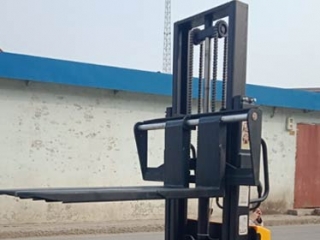 Portable Semi-electric Stacker, Pros and Cons of Semi-electric StackerSemi-electric stackers feature lightweight bodies and low costs, ideal for small warehouses with limited budgets. Learning their pros and cons helps enterprises select suitable stacking equipment.
Do you like ?0
Read more -
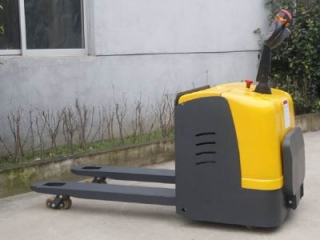 Operation Guide of Stand-on Full Electric Pallet TruckNew operators need standardized procedures for ride-on electric pallet trucks. Standard operation ensures safety, optimizes performance and reduces equipment wear in daily warehousing work.
Do you like ?0
Read more -
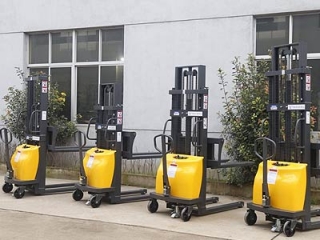 How Much Does a Semi-electric Stacker Cost? Price GuideSemi-electric stackers are cost-effective options to improve warehouse stacking efficiency. Prices vary by load capacity, lifting height and battery types for budget estimation.
Do you like ?0
Read more -
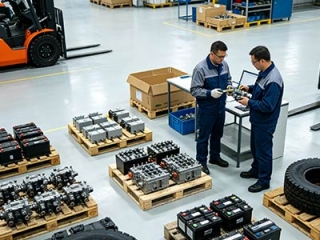 5 Strict Inspection Stages of Newnewton Forklift Before DeliveryForklift factory inspection determines equipment stability. Taizhou manufacturers adopt five testing procedures from parts sampling to full-load tests for reliable quality.
Do you like ?0
Read more








