Function and classification of braking systems for electric forklifts
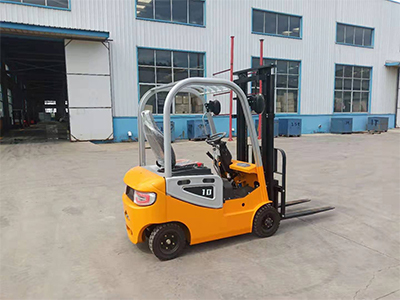
Jiangsu Electric Forklift Manufacturers: Apply resistance to electric forklifts in motion to consume the kinetic energy of the vehicle, forcing it to slow down and stop completely; When parking, preventing it from moving on its own is called braking the electric forklift; The system used to brake a vehicle is called a braking system.
1. The functions and requirements of the braking system. The main functions of the braking system are: ① to force the vehicle to slow down or stop as needed; ② Ensure that the vehicle is parked in its original position (even if there is a certain slope) and cannot automatically slide.
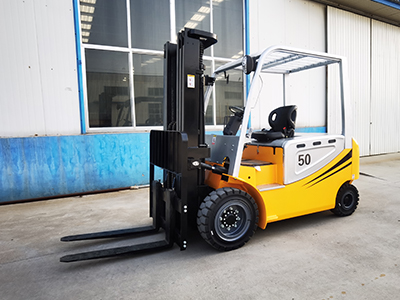
The requirements for the braking system are: ① there should be sufficient braking force to ensure that the braking distance meets the requirements at a certain speed; ② Lightweight and flexible operation; ③ The braking quality is good, and the braking force of each wheel is basically the same when braking; ④ Good braking balance, the braking force can quickly and horizontally increase during braking, and can also be quickly and completely released; The braking system should facilitate clearance adjustment and maintenance.
2. Composition and classification of braking systems. Electric forklifts, electric tractors, and internal combustion forklifts generally have two independent braking devices (systems) for their braking systems, namely the service braking and parking braking devices (systems).
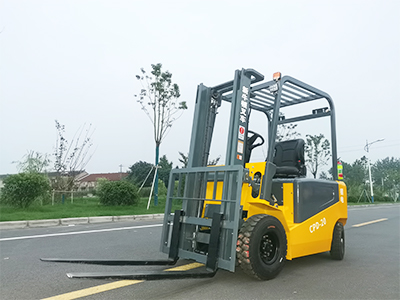
The service brake device, also known as the foot brake device, is operated by the driver through the foot pedal and is mainly used for braking, deceleration, or parking during vehicle operation. The parking brake device, also known as the hand brake device, is operated by the driver through the brake handle. It is mainly used for parking on a slope or after the vehicle has stopped, to reliably keep it in place and prevent slipping.
At present, Jiangsu electric forklift manufacturers use dry friction brakes on both electric forklifts and electric tractors. According to different structural types, brakes can be divided into several types: shoe type (drum type), disc type, and belt type; According to different transmission methods, it can be divided into mechanical and hydraulic types.
-
 Taizhou newnewton Forklift Manufacturer IntroductionAvoid selecting warehouse forklifts only by unit price. Check site conditions, certificates and after-sales. Newnewton, Taizhou source factory, provides full product range, CE certification, customization and reliable spare parts supply.
Do you like ?0
Read more -
 Semi-electric Stacker vs Manual Stacker Cost ComparisonWhen buying stacking equipment for small warehouses, compare semi-electric stackers and manual stackers from cost, efficiency and maintenance to balance upfront expense and long-term investment.
Do you like ?0
Read more -
 CE Certification for Manual Hydraulic StackerNewnewton manual hydraulic stackers exported to EU need CE certification complying with 2006/42/EC and EN1757-1, including safety assessment, technical documents and product compliance checks.
Do you like ?0
Read more -
 Stand-on vs Walk-behind Electric Pallet Truck ComparisonUnderstand the differences between stand-on and pedestrian electric pallet trucks in operation, efficiency, aisle requirements and costs. Choose the right model based on warehouse scale, transfer distance and order volume.
Do you like ?0
Read more -
 Operation Notes for Electric Self Elevating TruckPedestrian electric stackers cover tiered brand options with different features. International brands offer stable performance at high cost, while domestic brands and factory suppliers provide better cost performance and customization.
Do you like ?0
Read more -
 Operation Notes for Electric Self-elevating Truck | Truck Mounted Forklift SafetTruck-mounted self-loading forklifts fixed on truck tails handle cargo without loading docks. Control load and cargo gravity, inspect equipment and avoid soft slopes to prevent tipping and falling goods.
Do you like ?0
Read more