
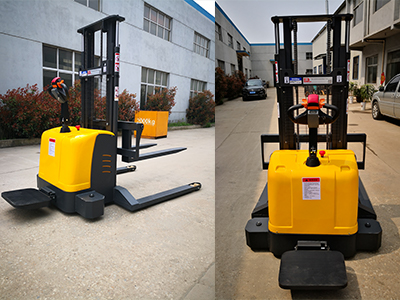
The system of electric forklifts using this steering method is usually arranged on the left side of the forklift, with the front connected to the frame and the rear connected to the driving device. It mainly consists of the steering wheel, steering shaft, connecting rubber pad, chain seat assembly, chain, large sprocket, and the rotating part of the driving device. During its operation, the steering wheel is rotated through the steering shaft, connecting rubber pads, and the small and large wheels in the chain seat drive the small sprocket to rotate. The chain also drives the large sprocket to rotate and the driving device to rotate, causing the driving wheel to deflect and achieve vehicle steering. Early small electric forklifts mostly used this steering type.
The steering system of a battery tractor is a front wheel (single wheel) steering system. The system mainly consists of steering wheel, steering shaft, steering gearbox, and front wheel assembly.
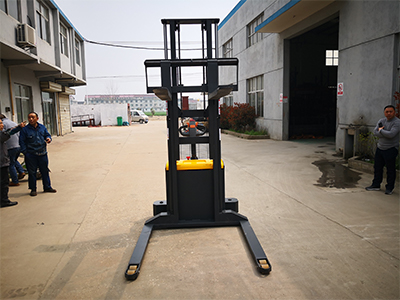
The structure of the electric forklift steering system is: the upper end of the steering shaft is connected to the steering wheel, and the lower end is connected to the small gear in the steering gearbox. The small gear is combined with the bridge gear. The bridge wheel also fits with the large gear. Machine a 149 arc groove on the lower end face of the large gear and limit the maximum turning angle through a limit pin. The function of the bridge gear is to align the direction of the steering wheel and the steering wheel. The function of the steering system steering gearbox is to amplify the force exerted by the driver on the square wheel (at a magnification of 2.9 times) and slow down the driver.
When the driver turns the steering wheel, the steering shaft and small gear rotate together, passing through the bridge gear, driving the large gear and its fixed axle fork shaft to rotate. The steering wheel is installed on the axle fork shaft, and it also rotates at a certain angle to achieve this.
The steering of electric forklift vehicles is connected to the steering shaft, fork shaft, and box through various bearings, and there are also bearings inside the axle wheels. These bearings and gears are lubricated with calcium based grease. Therefore, sufficient lubrication should be provided during maintenance and repair assembly.
-
 Taizhou newnewton Forklift Manufacturer IntroductionAvoid selecting warehouse forklifts only by unit price. Check site conditions, certificates and after-sales. Newnewton, Taizhou source factory, provides full product range, CE certification, customization and reliable spare parts supply.
Do you like ?0
Read more -
 Semi-electric Stacker vs Manual Stacker Cost ComparisonWhen buying stacking equipment for small warehouses, compare semi-electric stackers and manual stackers from cost, efficiency and maintenance to balance upfront expense and long-term investment.
Do you like ?0
Read more -
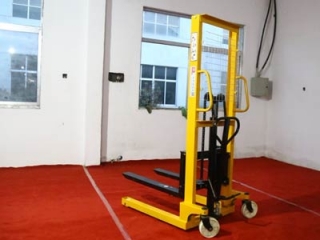 CE Certification for Manual Hydraulic StackerNewnewton manual hydraulic stackers exported to EU need CE certification complying with 2006/42/EC and EN1757-1, including safety assessment, technical documents and product compliance checks.
Do you like ?0
Read more -
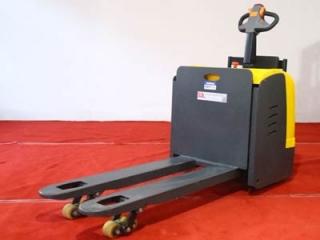 Stand-on vs Walk-behind Electric Pallet Truck ComparisonUnderstand the differences between stand-on and pedestrian electric pallet trucks in operation, efficiency, aisle requirements and costs. Choose the right model based on warehouse scale, transfer distance and order volume.
Do you like ?0
Read more -
 Operation Notes for Electric Self Elevating TruckPedestrian electric stackers cover tiered brand options with different features. International brands offer stable performance at high cost, while domestic brands and factory suppliers provide better cost performance and customization.
Do you like ?0
Read more -
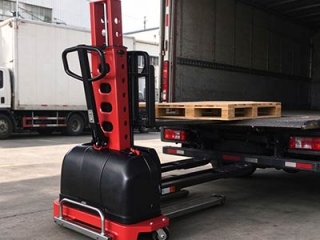 Operation Notes for Electric Self-elevating Truck | Truck Mounted Forklift SafetTruck-mounted self-loading forklifts fixed on truck tails handle cargo without loading docks. Control load and cargo gravity, inspect equipment and avoid soft slopes to prevent tipping and falling goods.
Do you like ?0
Read more








