Forklift manufacturers: working devices of electric forklift
The working device is the working part of an electric forklift for loading and unloading operations, which bears all the weight of the goods and completes the processes of forking, lifting, stacking, and stacking of the goods. The working devices of electric forklifts vary depending on the type of forklift, and are usually divided into two categories: gantry type working devices and forward extension type working devices. The forward extension working device can also be divided into a connecting rod type and a telescopic arm type (also known as a gantry less type). Forklift manufacturer tells everyone that balanced weight forklifts belong to gantry forklifts, and their working devices mainly consist of pick-up devices (forks and forks), gantry frames, lifting mechanisms, gantry tilt mechanisms, and hydraulic transmission systems.
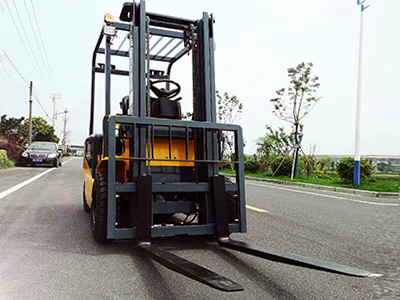
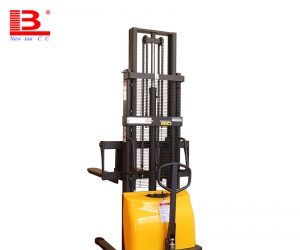
The gantry of an electric forklift is the framework of the lifting mechanism and also the guide rail for the movement of the forklift. In order to achieve a certain lifting height for the goods, and to reduce the overall dimensions, the forklift gantry can be made into a retractable type through warehouse doors, truck doors, or workshop access doors. The gantry of most forklifts is a two-stage gantry, with the outer section usually not lifting and called the outer gantry; The inner section can retract up and down along the outer gantry, known as the inner gantry. For forklifts with large lifting heights, they can be made into a three stage gantry with two stages that can be retracted. The outer gantry is hinged to the frame or front axle with its lower crossbeam, forming a hinged support for the gantry's tilt motion; The other fulcrum of the outer gantry is hinged to the frame through a tilting mechanism. Forklift manufacturer tells everyone that the core device of the gantry tilt mechanism is the tilt cylinder. The expansion and contraction of the tilt cylinder realizes the forward and backward tilt of the gantry, that is, the forward and backward tilt of the forks, making it easy for the forks to pick up and stack goods, and ensuring that the goods remain stable on the forks during forklift movement and do not slip off the goods during braking.
The lifting mechanism of electric forklift consists of lifting cylinders, guide pulleys and wheel frames, lifting chains, and forks. The lifting oil cylinder is installed on the lower crossbeam of the outer gantry. The upper end of the piston rod of the oil cylinder is connected to the wheel frame, and the guide pulley is installed on the wheel frame. A lifting chain is wound around the guide pulley, with one end fixed to the oil cylinder cover (or gantry crossbeam) and the other end connected to the fork frame by bypassing the guide pulley. The lifting oil cylinder lifts the guide pulley, which drives the chain through the pulley, and the chain pulls the fork frame to raise and lower it. Forklift manufacturer tells everyone that forks or other pick-up devices are installed on forks to achieve the lifting and lowering of goods.
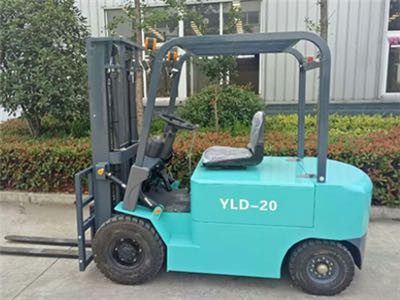
The lifting and tilting actions of the gantry and fork of an electric forklift are all executed by various working oil cylinders. The working device of a balanced forklift is installed at the forefront of the forklift to facilitate loading and unloading operations. Forklift manufacturer tells everyone that forward moving forklifts have a gantry forward movement mechanism, and some are also equipped with a pitching mechanism for forks.
-
 Taizhou newnewton Forklift Manufacturer IntroductionAvoid selecting warehouse forklifts only by unit price. Check site conditions, certificates and after-sales. Newnewton, Taizhou source factory, provides full product range, CE certification, customization and reliable spare parts supply.
Do you like ?0
Read more -
 Semi-electric Stacker vs Manual Stacker Cost ComparisonWhen buying stacking equipment for small warehouses, compare semi-electric stackers and manual stackers from cost, efficiency and maintenance to balance upfront expense and long-term investment.
Do you like ?0
Read more -
 CE Certification for Manual Hydraulic StackerNewnewton manual hydraulic stackers exported to EU need CE certification complying with 2006/42/EC and EN1757-1, including safety assessment, technical documents and product compliance checks.
Do you like ?0
Read more -
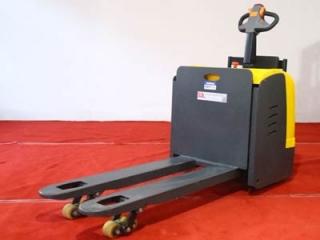 Stand-on vs Walk-behind Electric Pallet Truck ComparisonUnderstand the differences between stand-on and pedestrian electric pallet trucks in operation, efficiency, aisle requirements and costs. Choose the right model based on warehouse scale, transfer distance and order volume.
Do you like ?0
Read more -
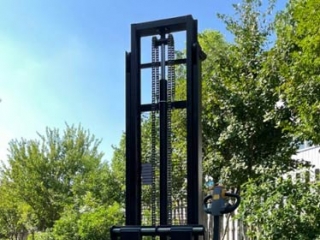 Operation Notes for Electric Self Elevating TruckPedestrian electric stackers cover tiered brand options with different features. International brands offer stable performance at high cost, while domestic brands and factory suppliers provide better cost performance and customization.
Do you like ?0
Read more -
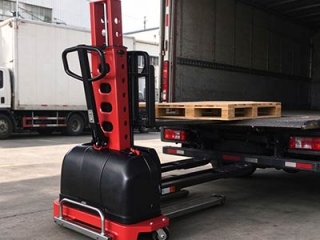 Operation Notes for Electric Self-elevating Truck | Truck Mounted Forklift SafetTruck-mounted self-loading forklifts fixed on truck tails handle cargo without loading docks. Control load and cargo gravity, inspect equipment and avoid soft slopes to prevent tipping and falling goods.
Do you like ?0
Read more