
When comparing 2WD vs 4WD rough terrain forklift, many buyers struggle to decide which model fits their operation. Choosing equipment merely based on price often leads to insufficient climbing power, slipping or getting stuck on muddy ground. This article distinguishes applicable scenarios for both models by analyzing working conditions, operating costs and performance differences.
Climbing capacity and performance on complex terrain 4WD rough terrain forklifts deliver power to all four wheels with stronger traction. Their standard maximum climbing gradient reaches 25°–30°, resisting wheel spin and getting stuck on mud, sand and soft ground after rain. 2WD rough terrain forklifts adopt rear-wheel drive. They perform steadily on dry solid ground with a maximum climbing gradient of 12°–18°, yet prone to trapping on slippery and soft surfaces. Reference: Standard climbing test data of same-tonnage rough terrain forklifts from manufacturers.
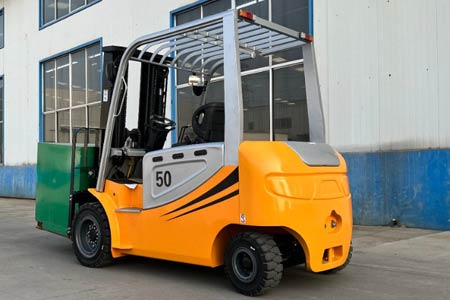
Initial procurement cost Under the same tonnage, lifting height and engine configuration, 4WD rough terrain forklifts cost 12%–18% more than 2WD versions. The simpler transmission structure of 2WD models brings lower upfront investment.
Fuel consumption For continuous operation on flat dry ground: 2WD models achieve 15%–20% lower comprehensive fuel consumption compared with 4WD. For long-term operation on muddy and steep sites: 4WD units avoid frequent self-rescue, improving working efficiency and cutting hidden costs caused by downtime from trapping. Reference: 8-hour mixed-cycle continuous fuel consumption test records.
Long-term maintenance cost 2WD forklifts contain fewer transmission components without transfer cases, featuring high spare part compatibility, easy maintenance and lower service fees. 4WD units are equipped with transfer cases and front & rear drive axles. More components mean extra maintenance items under heavy loads and higher long-term service expenses.
Suitable working conditions Applicable scenarios for 2WD all terrain forklift: Dry compacted sites, hardened dirt roads and gentle open stockyards with rare standing water and mud; single-shift operation; strict budget control for purchase and fuel expenses.
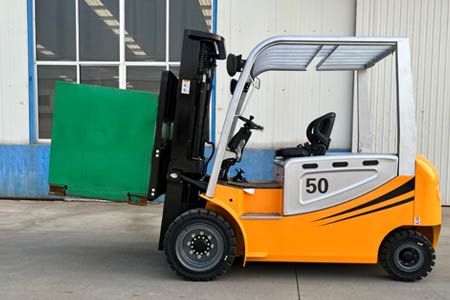
Applicable scenarios for 4WD rough terrain forklift: Mountain forest farms, muddy construction sites in rainy weather, soft sand land and areas with continuous steep slopes; all-weather outdoor work where downtime due to trapping is unacceptable.
Quick Selection Guide
Dry, gentle ground & limited budget → Choose 2WD all terrain forklift Frequent mud, slopes, sand or rainy weather requiring strong off-road performance → Choose 4WD rough terrain forklift
The differences between 2WD vs 4WD rough terrain forklift are clear. With a full understanding of passability, fuel consumption and maintenance costs, you can select suitable all-terrain forklifts according to site conditions.
-
 Reliability Of Newnewton Warehouse Forklifts For Heavy-Duty ShiftsWarehouse forklift reliability relies on industrial parts, reinforced frames and factory durability tests. Proper operation and maintenance reduce unexpected downtime.
Do you like ?0
Read more -
 Forklift Configuration Strategy For Dense Warehousing, Warehouse ForkliftDense warehousing needs matched forklifts besides racks. Reach and trilateral stackers fit different layouts, coordinate aisle, load curve and floor for smooth handling.
Do you like ?0
Read more -
 Full Container Supply For Export Forklifts, Forklift ManufacturerBulk forklift orders for overseas can ship by FCL or LCL. Newnewton FCL offers stable freight, safer packing and mixed models for large purchases.
Do you like ?0
Read more -
 Stand-on Reach Stacker For Narrow Aisle Stacking, Mast Reach StructureStand-on reach stackers feature sliding masts that stay outside racks. They boost storage density in narrow aisles and require flat floors and standard pallets.
Do you like ?0
Read more -
 Stand-on Counterbalance Stacker For Various Pallets, Why No Leg RestrictionCounterbalance stackers have no front outriggers, using rear counterweight to avoid pallet interference. They fit various odd pallets yet need wider warehouse aisles.
Do you like ?0
Read more -
 Custom Walk-Behind Counterbalance Stacker | Non-Standard ModificationsStandard walk-behind counterbalance stackers struggle with non-standard pallets and tight aisles. Customize load, lift, forks and structure, share working conditions for safe design.
Do you like ?0
Read more








