
Diesel-powered forklifts are widely used in various wheeled transport vehicles in logistics industries such as terminals, factories, and warehouses. As an indispensable tool for modern logistics and transportation, diesel forklifts play an important role in the loading and unloading, handling, short-distance transportation and heavy-duty transportation of goods. They can enter various places such as freight yards, airports, stations, ports, etc., for the loading and unloading and handling of palletized goods, and are indispensable equipment in pallet transportation and container transportation. Diesel forklifts are mainly divided into three categories: electric forklifts, warehouse forklifts, and internal combustion forklifts.
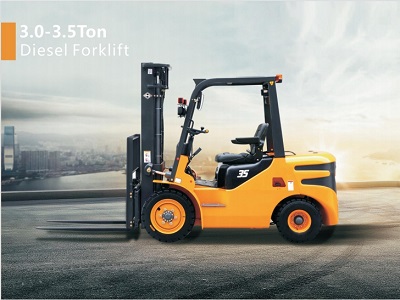
The first is an electric diesel forklift, which uses a motor as a power and a battery as an energy source. The load capacity is between 1.0 and 4.8 tons, and it is suitable for environments with working groove widths in the range of 3.5 to 5.0 meters. Due to its pollution-free and low-noise characteristics, it is especially suitable for places such as medicine and food industry with high environmental requirements. Since the battery needs to be recharged for about 8 hours, a backup battery is needed to support multiple shifts, and a dedicated charging facility is required in the workplace.

The second is the warehouse diesel forklift, which is mainly used for the handling of goods in the warehouse. Most warehouse forklifts are driven by motors, and a few, such as manual pallet forklifts, are driven by manpower. Motor-driven forklifts are widely used in the warehousing industry due to their compact structure, flexible movement, light weight and good environmental protection. In multi-shift operations, spare batteries are required and a dedicated charging place is provided.
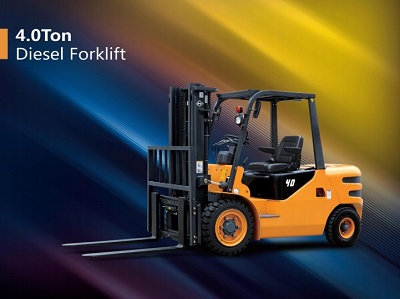
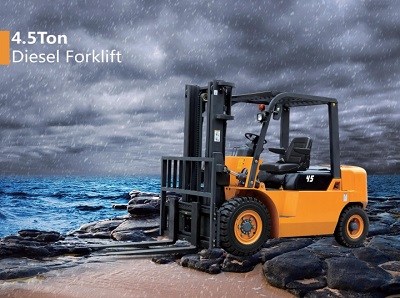
Finally, there are diesel forklifts with internal combustion engines, including heavy-duty forklifts, ordinary internal combustion forklifts, container forklifts and side forklifts, etc. Internal combustion forklifts are usually powered by gasoline, diesel, liquefied petroleum gas or natural gas engines, and have a strong carrying capacity and can carry more than 5 tons of goods. It is suitable for outdoor places with no special requirements for exhaust gas emission and noise, and can operate continuously for a long time and work in harsh environments.
-
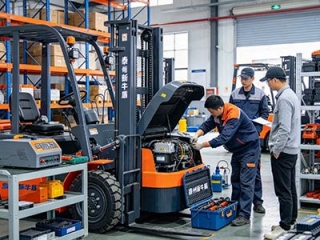 Taizhou newnewton Forklift Manufacturer IntroductionAvoid selecting warehouse forklifts only by unit price. Check site conditions, certificates and after-sales. Newnewton, Taizhou source factory, provides full product range, CE certification, customization and reliable spare parts supply.
Do you like ?0
Read more -
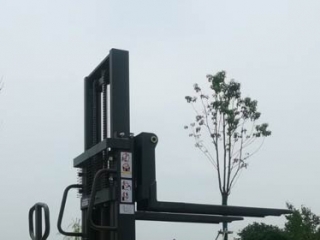 Semi-electric Stacker vs Manual Stacker Cost ComparisonWhen buying stacking equipment for small warehouses, compare semi-electric stackers and manual stackers from cost, efficiency and maintenance to balance upfront expense and long-term investment.
Do you like ?0
Read more -
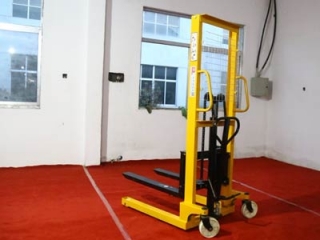 CE Certification for Manual Hydraulic StackerNewnewton manual hydraulic stackers exported to EU need CE certification complying with 2006/42/EC and EN1757-1, including safety assessment, technical documents and product compliance checks.
Do you like ?0
Read more -
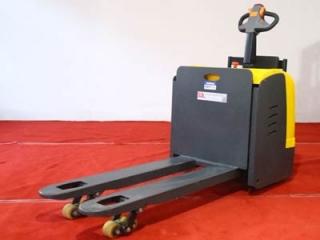 Stand-on vs Walk-behind Electric Pallet Truck ComparisonUnderstand the differences between stand-on and pedestrian electric pallet trucks in operation, efficiency, aisle requirements and costs. Choose the right model based on warehouse scale, transfer distance and order volume.
Do you like ?0
Read more -
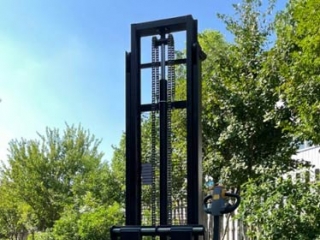 Operation Notes for Electric Self Elevating TruckPedestrian electric stackers cover tiered brand options with different features. International brands offer stable performance at high cost, while domestic brands and factory suppliers provide better cost performance and customization.
Do you like ?0
Read more -
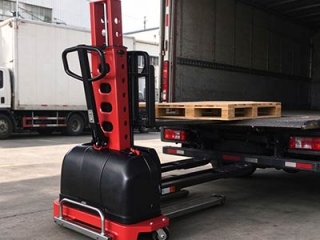 Operation Notes for Electric Self-elevating Truck | Truck Mounted Forklift SafetTruck-mounted self-loading forklifts fixed on truck tails handle cargo without loading docks. Control load and cargo gravity, inspect equipment and avoid soft slopes to prevent tipping and falling goods.
Do you like ?0
Read more








